Written by Donna
Affiliate marketing researcher and founder of AffiliateEducationForBeginners.com
Last updated: June 2026
Reviewed for beginner-friendly accuracy: June 2026
Quick Answer: How Do You Create Content That Sells?
Content that sells focuses on helping readers solve problems, answer questions, and make informed decisions. The most effective content combines useful information, trust-building, and clear next steps rather than relying on aggressive sales tactics.
Many beginners think successful content is about writing persuasive sales copy. What I learned is that content usually converts better when it focuses on helping first and selling second. Readers are more likely to take action when they trust the information and believe the recommendation genuinely helps them.
Content that sells often includes:
- Helpful solutions
- Clear explanations
- Real examples
- Trust signals
- Strong calls to action
- Relevant recommendations
This guide is part of the complete Content Marketing Strategies for Affiliate Success learning system.
? Content Marketing Strategies for Affiliate Success
If you’re new to affiliate marketing, start here:
? Affiliate Marketing for Beginners
What I Learned About Creating Content That Converts
When I first started learning affiliate marketing, I assumed content converted because of clever wording or persuasive sales techniques.
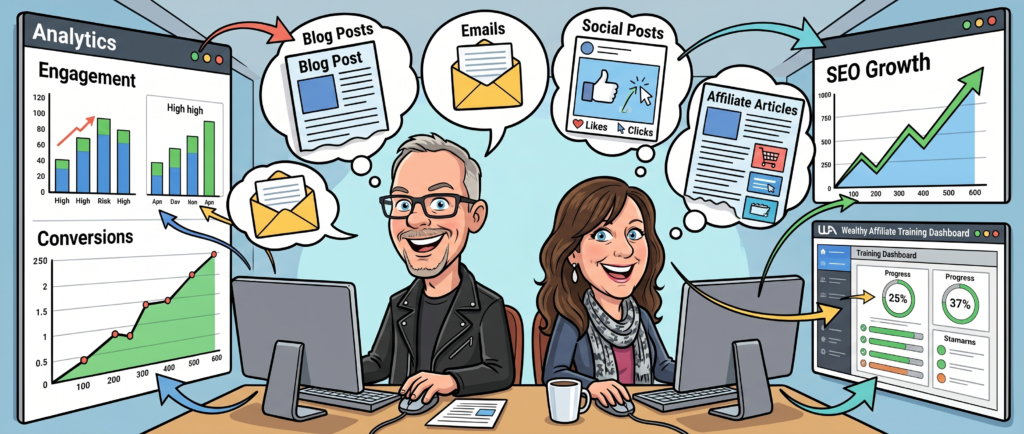
Over time, I realized that the content producing the best results was usually the content that helped people the most. Effective affiliate content marketing is rarely about clever sales tactics. It is about creating useful, trustworthy information that helps readers solve problems and make informed decisions.
Readers rarely visit a website hoping to be sold something. They visit because they have a question, a problem, or a goal they want to achieve.
The articles that consistently generated engagement were the ones that answered those questions clearly, provided useful information, and helped readers feel confident about their next step.
One thing that surprised me most is that trust often influences conversions more than traffic volume. A smaller audience that trusts your recommendations can outperform a larger audience that doesn’t.
Why Some Content Converts and Other Content Doesn’t
The difference between content that converts and content that gets ignored often comes down to understanding reader intent.
Visitors generally want one of three things:
| Reader Goal | Content Type |
|---|---|
| Learn Something | Guides and tutorials |
| Solve a Problem | How-to content |
| Make a Decision | Reviews and comparisons |
Content performs best when it matches what the reader is trying to accomplish.
A visitor searching for:
“best affiliate programs for beginners”
needs different information than someone searching:
“what is affiliate marketing?”
Understanding intent helps you create content that feels relevant and useful.
Content converts when it matches reader intent. People searching for information need education, while people comparing options need clarity and confidence. The closer your content aligns with the reader’s goal, the more likely it is to generate engagement and conversions. This is one of the most important principles of how to write content that converts.
? Google Search Central Helpful Content Guidance
The 5 C’s of Content Creation
A simple framework that can improve almost any piece of content is the 5 C’s.
| Principle | Purpose |
|---|---|
| Clear | Easy to understand |
| Concise | Removes unnecessary information |
| Compelling | Keeps readers engaged |
| Credible | Builds trust |
| Consistent | Creates familiarity |
These principles work whether you’re writing:
- Blog posts
- Product reviews
- Email campaigns
- Social media content
- Tutorials
One lesson I learned is that clarity almost always beats complexity.
The easier content is to understand, the more likely readers are to stay engaged.
The 70-20-10 Rule for Content Marketing
One content strategy that can help prevent burnout is the 70-20-10 Rule.
Instead of constantly trying to create completely new ideas, this framework helps balance content creation while keeping your audience engaged.
| Content Type | Percentage | Purpose |
|---|---|---|
| Core Content | 70% | Guides, tutorials, reviews, and educational content |
| Curated Content | 20% | Industry news, expert insights, and helpful resources |
| Experimental Content | 10% | New formats, trends, and creative ideas |
For affiliate marketers, the majority of your content should focus on solving problems and answering questions.
Examples of core content include:
- Beginner guides
- Product reviews
- Comparison articles
- Tutorials
- Resource pages
The goal is to build a library of helpful content that continues attracting readers long after it is published.
? The Role of Blogging in Affiliate Marketing
? Writing Product Reviews That Drive Sales
The 3-3-3 Rule for Creating Content That Converts
The 3-3-3 Rule is a simple framework for keeping content focused and persuasive without sounding overly promotional.
The formula is:
Three Benefits
Explain three key outcomes the reader wants.
Three Proof Points
Support your claims with examples, experience, statistics, or testimonials.
Three-Sentence Call to Action
Clearly explain the next step without overwhelming the reader.
For example:
Benefits
- Learn affiliate marketing faster
- Build a website correctly from the start
- Avoid common beginner mistakes
Proof Points
- Step-by-step training
- Built-in keyword research tools
- Active community support
CTA
Start with the free training. Explore the tools. Decide whether it’s the right fit for your goals.
This framework works particularly well for:
- Product reviews
- Landing pages
- Affiliate recommendations
- Email campaigns
Step-by-Step Guide to Writing Content That Converts
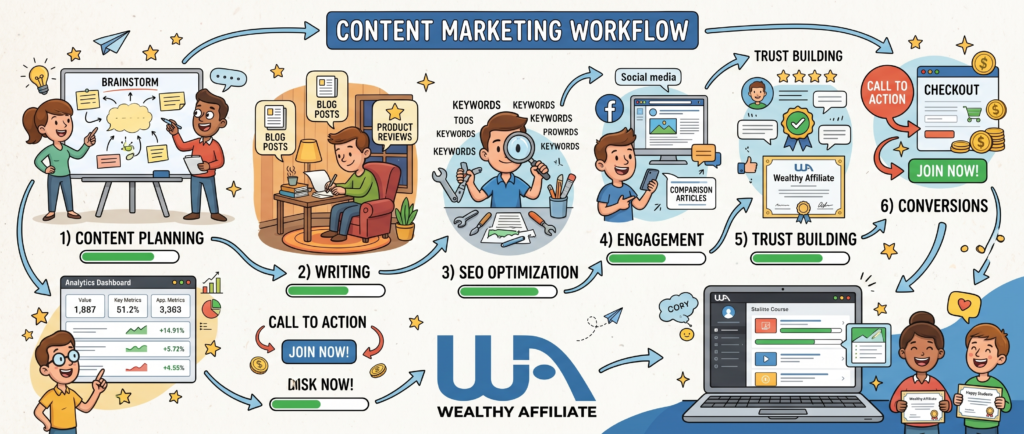
Creating content that converts starts long before you begin writing.
| Content Type | Primary Goal |
|---|---|
| Blog Posts | Education |
| Tutorials | Problem Solving |
| Reviews | Decision Making |
| Comparisons | Product Selection |
| Resource Pages | Recommendations |
The most successful content follows a process.
Step 1: Understand Your Audience
Before writing anything, ask:
- What problem are they trying to solve?
- What information are they looking for?
- What concerns or objections might they have?
- What outcome do they want?
The better you understand your audience, the easier it becomes to create relevant content.
Many beginners struggle because they focus on what they want to say rather than what their audience needs to hear. Successful content marketing for beginners starts with understanding reader questions, challenges, and goals before creating content.
Step 2: Create a Strong Headline
Your headline determines whether people click.
Strong headlines often:
- Promise a solution
- Address a problem
- Create curiosity
- Highlight a benefit
Examples:
- How to Create Content That Sells
- Content Engagement Strategies That Increase Conversions
- Why Your Content Isn’t Converting (And How to Fix It)
Step 3: Lead With Value
Readers should immediately understand why the content matters.
Address their problem early and show them they are in the right place.
This improves engagement and reduces bounce rates.
Step 4: Build Trust
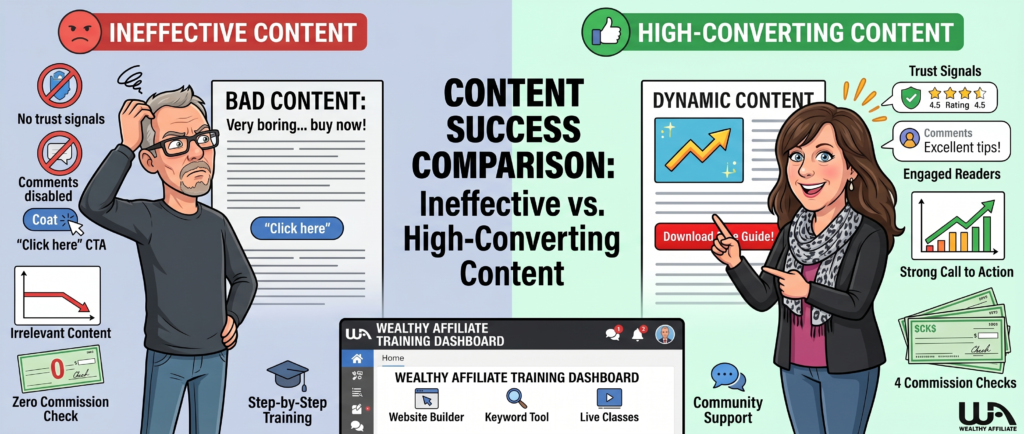
Trust is one of the most important conversion factors.
You can build trust through:
- Personal experience
- Case studies
- Testimonials
- Data and research
- Honest recommendations
One thing I learned is that readers often respond more positively to honest lessons and mistakes than perfect success stories.
? The Power of Storytelling in Affiliate Marketing
? Leveraging User-Generated Content Effectively
? How Affiliate Marketing Works: A Step-by-Step Guide
Step 5: Include a Clear Next Step
Readers should never wonder what to do next.
A strong call to action provides direction and helps readers continue their journey.
Content Engagement Strategies for 2026
Engagement plays a major role in how readers interact with content.
The longer people stay engaged, the more likely they are to trust your recommendations and explore additional content.
Some effective content engagement strategies include:
- Using short paragraphs
- Adding bullet points
- Including visuals
- Asking questions
- Creating interactive checklists
- Linking to related content
- Sharing personal experiences
Good engagement is not about keeping readers on a page as long as possible.
The most effective conversion-focused content keeps readers moving forward. Whether the goal is reading another article, joining an email list, or exploring a recommended resource, engagement should help readers take meaningful next steps.
It is about helping them find what they need as efficiently as possible.
External resources:
? HubSpot Content Marketing Resources
Learn Content Marketing While Building Your Website
Many beginners are trying to learn:
- Content creation
- SEO
- Affiliate marketing
- Website building
- Traffic generation
- Monetization
all at the same time.
That can feel overwhelming.
One reason I recommend Wealthy Affiliate is because it combines training, website hosting, keyword research tools, content creation support, and community guidance into one beginner-friendly platform.
Instead of trying to piece everything together yourself, you can learn while building your website step by step.
? Start the Free Wealthy Affiliate Starter Membership
Creating Viral Content Without Chasing Trends
Many content creators believe they need viral content to succeed.
While viral content can generate temporary traffic spikes, long-term affiliate success usually comes from creating evergreen content that continues attracting readers over time.
Instead of chasing every trend, focus on creating content that remains useful months or even years after publication.
Some ways to increase content sharing include:
- Solving common problems
- Sharing relatable experiences
- Including original insights
- Creating useful visuals
- Writing memorable headlines
- Publishing practical advice
One thing I learned is that a helpful article generating steady traffic for years is often more valuable than a viral post that disappears after a week.
The best content marketing strategy combines evergreen content with occasional trend-based opportunities.
Many high-converting content assets are not viral at all. Instead, they consistently answer questions, solve problems, and attract targeted traffic from search engines month after month.
? How to Build a Content Calendar for Affiliate Marketing
? The Role of Blogging in Affiliate Marketing
Common Content Conversion Mistakes
Many content creators work hard to generate traffic but struggle to turn readers into subscribers, leads, or customers.
Often, a few common mistakes are responsible.
Focusing on Features Instead of Benefits
Readers care more about outcomes than features.
Instead of explaining what something does, explain how it helps solve a problem.
Weak Calls to Action
Many articles provide useful information but never explain what readers should do next.
A strong call to action creates clarity and direction.
Writing for Search Engines Instead of People
SEO is important, but content should always prioritize readers first.
Google continues rewarding people-first content that demonstrates experience and provides value.
Not Building Trust
Conversions often happen after trust is established.
Trust can be strengthened through:
- Personal experiences
- Honest recommendations
- Transparent disclosures
- Helpful educational content
- Real-world examples
Ignoring Internal Links
Readers frequently need additional information before taking action.
Internal links help them continue learning and exploring related content.
? How to Write Affiliate Comparison Content That Converts
? Affiliate Marketing for Beginners
? Mistakes to Avoid When Starting Affiliate Marketing
One mistake I made early on was focusing too much on publishing content and not enough on understanding what readers actually needed. Some of my most successful articles came after I spent more time researching questions and less time worrying about writing the perfect post.
Content Marketing Trends for 2026
Content marketing continues to evolve, but the core principles remain remarkably consistent.
The most important content marketing trends for 2026 include:
| Trend | Why It Matters |
|---|---|
| Helpful Content | Improves trust and rankings |
| Experience-Based Content | Supports EEAT signals |
| AI-Assisted Content Creation | Improves efficiency |
| Video Integration | Expands audience reach |
| Community Building | Strengthens loyalty |
| Content Refreshing | Improves long-term performance |
| Search Intent Optimization | Improves relevance |
One thing that stands out is that authenticity is becoming increasingly important.
As more AI-generated content appears online, readers often gravitate toward content that includes real experiences, practical insights, and genuine recommendations.
This creates opportunities for affiliate marketers willing to share what they learn while building their businesses.
? Semrush Content Marketing Resources
Frequently Asked Questions About Creating Content That Sells
What is content that sells?
Content that sells is content that helps readers solve problems, answer questions, and make informed decisions while naturally guiding them toward relevant products, services, or solutions.
How do you create content that converts?
Content converts when it matches reader intent, provides useful information, builds trust, and includes a clear next step. Helpful content combined with relevant recommendations often performs better than aggressive sales tactics.
What are the 5 C’s of content creation?
The 5 C’s are Clear, Concise, Compelling, Credible, and Consistent. These principles help improve readability, engagement, trust, and overall content quality.
What is the 70-20-10 rule in content marketing?
The 70-20-10 rule recommends creating 70% core educational content, 20% curated industry content, and 10% experimental content to maintain balance while serving your audience effectively.
What is the 3-3-3 rule in marketing?
The 3-3-3 rule focuses on presenting three benefits, three proof points, and a concise three-sentence call to action to keep messaging clear and persuasive.
Why is engagement important for content marketing?
Engagement helps readers stay connected to your content, build trust, and explore additional resources. Higher engagement often leads to stronger conversions and audience loyalty.
Can beginners create content that sells?
Yes. Beginners can create effective content by focusing on audience needs, solving problems, building trust, and providing useful recommendations rather than trying to sell aggressively.
What types of content convert best for affiliate marketing?
Product reviews, comparison articles, tutorials, beginner guides, case studies, and resource pages often perform well because they help readers solve problems and make confident decisions.
Once you know how to create content that converts, the next step is choosing products and programs that can generate commissions. See 7 Affiliate Programs Beginners Can Actually Make Money With (2026).
Ready to Create Content That Builds Trust and Drives Results?
Creating content that sells is not about using clever tricks or persuasive language.
It is about understanding your audience, solving real problems, and helping readers make informed decisions.
When you combine helpful content with SEO, trust-building, and clear calls to action, your content becomes far more effective over time.
If you’re ready to learn content marketing, SEO, affiliate marketing, and website building in one place, Wealthy Affiliate provides training, tools, hosting, and community support designed specifically for beginners.
? Start the Free Wealthy Affiliate Starter Membership
Continue Learning
Explore these related guides:
? How Beginners Actually Make Their First Dollar Online
? The Role of Blogging in Affiliate Marketing
? Writing Product Reviews That Drive Sales
? How to Build a Content Calendar for Affiliate Marketing
? The Power of Storytelling in Affiliate Marketing
? Leveraging User-Generated Content Effectively
? How to Use Video for Affiliate Marketing (2026)
? SEO for Affiliate Marketing for Beginners
? Best Affiliate Programs for Beginners
Affiliate Disclaimer
Some links on this page may be affiliate links. If you choose to sign up or purchase through them, I may earn a commission at no additional cost to you. I only recommend products, services, and platforms that I personally use, trust, or believe can genuinely help beginners build an online business.