Written by Donna
Affiliate marketing researcher and founder of AffiliateEducationForBeginners.com
Last updated: June 2026
Reviewed for beginner-friendly accuracy: June 2026
Quick Answer: What Is an Affiliate Marketing Content Calendar?
An affiliate marketing content calendar is a planning system that helps you organize blog posts, reviews, tutorials, videos, seasonal promotions, and affiliate campaigns in advance.
Instead of wondering what to publish next, a content calendar gives you a roadmap that keeps your content consistent, supports SEO goals, and helps you build authority over time.
One of the biggest surprises for me was realizing that successful affiliate websites rarely grow because of a few great articles. They grow because content is published consistently over months and years.
A well-planned content calendar helps you:
- Stay consistent
- Publish content regularly
- Support SEO growth
- Organize affiliate promotions
- Build topical authority
- Reduce content creation stress
This guide is part of the complete Content Marketing Strategies for Affiliate Success learning system.
If you’re still learning the foundations of affiliate marketing, start here:
? Affiliate Marketing for Beginners
Why Content Calendars Matter for Affiliate Marketing
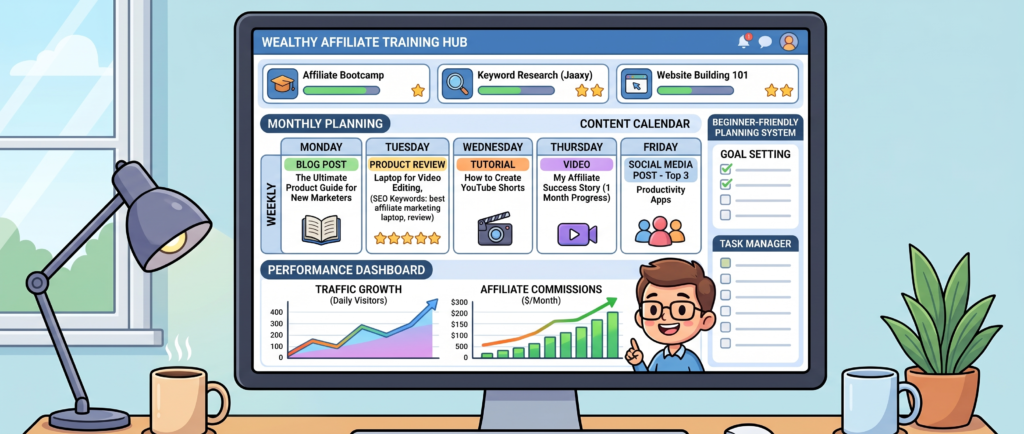
Consistency is one of the most important factors in affiliate marketing success.
Many beginners create content when they feel inspired and then stop publishing for weeks or months. A content calendar removes guesswork and creates a repeatable publishing process.
Benefits include:
- Better content organization
- More consistent publishing
- Improved SEO planning
- Stronger topical authority
- Better promotion scheduling
- Reduced content stress
Content calendars also make it easier to balance different content types.
| Content Type | Purpose |
|---|---|
| Product Reviews | Support buying decisions |
| Comparison Articles | Help readers compare options |
| Tutorials | Solve problems |
| Beginner Guides | Build trust and authority |
| Videos | Increase engagement |
| Seasonal Content | Capture timely traffic |
One lesson I learned is that planning content in advance often leads to better content because you have time to research topics instead of rushing to publish.
? The Role of Blogging in Affiliate Marketing
How to Build an Affiliate Marketing Content Calendar Step-by-Step
Creating a content calendar does not need to be complicated.
Many successful affiliate marketers start with a simple spreadsheet or planning document and improve their system as their website grows.
Step 1: Choose Your Core Content Topics
Start by identifying the main topics you want your website to cover.
For example, an affiliate marketing website might focus on:
- Affiliate marketing basics
- SEO
- Content marketing
- Traffic generation
- Affiliate programs
- Online business tools
These core topics become the foundation of your content strategy and help build topical authority.
? SEO for Affiliate Marketing for Beginners
Step 2: Research Keywords and Questions
Before creating content, identify what your audience is searching for.
Keyword research helps uncover:
- Beginner questions
- Product comparisons
- Buying intent searches
- Problem-solving topics
- Seasonal opportunities
Helpful keyword research tools include:
| Tool | Best For |
|---|---|
| Google Keyword Planner | Beginner keyword research |
| Google Search Console | Existing content opportunities |
| Ahrefs | Competitive analysis |
| SEMrush | Keyword planning |
| Wealthy Affiliate Keyword Tool | Affiliate niche research |
One lesson I learned is that content performs much better when it starts with real search demand instead of guessing what readers want.
Google also recommends creating content that is helpful, reliable, and focused on people first rather than search engines first. Understanding what your audience is searching for allows you to create content that genuinely answers their questions and solves problems.
? Google Search Central Helpful Content Guidance
Step 3: Plan Content Types
A healthy content calendar includes multiple content formats.
| Content Type | Goal |
| Product Reviews | Drive affiliate commissions |
| Comparison Articles | Help readers choose |
| Tutorials | Build authority |
| Beginner Guides | Attract new visitors |
| Resource Pages | Recommend tools |
| Videos | Increase engagement |
Planning multiple content formats keeps your site balanced and helps support different stages of the buyer journey.
? Writing Product Reviews That Drive Sales
? How to Write Affiliate Comparison Content That Converts
? How to Use Video for Affiliate Marketing (2026)
Step 4: Create a Publishing Schedule
Choose a publishing frequency that is realistic.
A common mistake is creating an ambitious schedule that becomes difficult to maintain.
Example:
| Publishing Goal | Schedule |
| Beginner | 1 article per week |
| Intermediate | 2–3 articles per week |
| Advanced | 4–5 articles per week |
Consistency is usually more important than volume.
Publishing one quality article every week often produces better long-term results than publishing ten articles one week and none the next month.
Build Your Content System While Learning Affiliate Marketing
Many beginners struggle because they are trying to learn content creation, SEO, affiliate marketing, and website building at the same time.
Wealthy Affiliate provides training, tools, hosting, keyword research, and community support designed specifically for affiliate marketers.
If you’re ready to build a long-term affiliate business, you can start with a free Starter Membership.
? Start the Free Wealthy Affiliate Starter Membership
Planning Content Around Affiliate Promotions
A content calendar becomes even more valuable when you align content with promotions and seasonal opportunities.
Examples include:
- Black Friday
- Cyber Monday
- New Year goals
- Back-to-school promotions
- Holiday gift guides
- Product launches
Planning these articles months in advance gives search engines time to discover and rank your content.
Many affiliate marketers lose valuable traffic simply because seasonal content was published too late.
? Best Affiliate Programs for Beginners
? Affiliate Programs Explained
Using a Content Calendar for SEO
One of the biggest benefits of a content calendar is improved SEO planning.
Rather than publishing random articles, you can build content clusters that support each other through internal linking.
For example:
| Hub Topic | Supporting Content |
| Content Marketing | Blogging, Video, Storytelling |
| SEO | Keywords, Backlinks, Internal Linking |
| Traffic Generation | Organic Traffic, Pinterest, Social Media |
| Affiliate Programs | Reviews, Comparisons, Commission Structures |
This approach helps search engines understand your expertise and improves site organization.
A common misconception is that SEO is mostly about keywords. In reality, content organization and topical authority often play a major role in rankings.
A content calendar helps ensure related articles are planned strategically, making it easier to build topic clusters that strengthen internal linking and demonstrate expertise over time.
? The Power of Storytelling in Affiliate Marketing
? Organic Traffic Techniques for Affiliate Marketers (2026)
? How to Drive Traffic to a New Affiliate Website (2026)
Common Content Calendar Mistakes
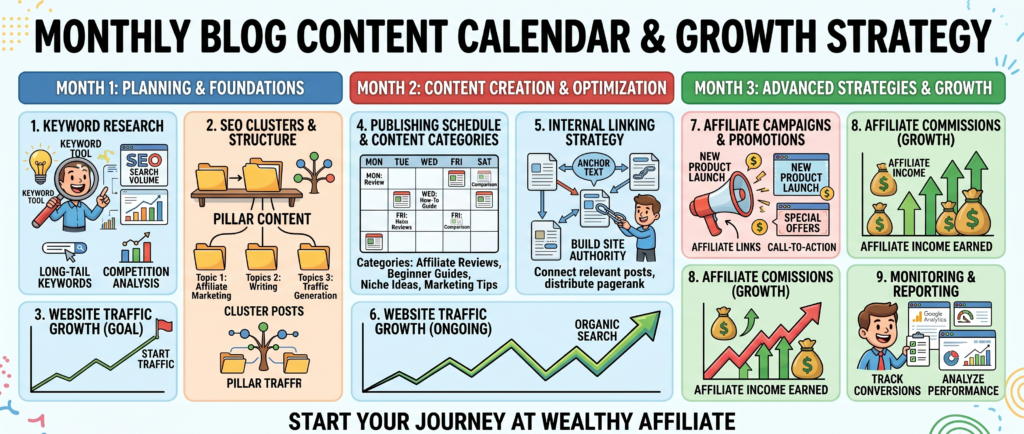
Even the best content calendars can fail when they become too complicated.
Common mistakes include:
- Planning too far ahead
- Publishing inconsistently
- Ignoring keyword research
- Creating content without search intent
- Failing to update older articles
- Overloading your schedule
- Not tracking performance
One lesson I learned is that a simple content calendar that gets used consistently is far more valuable than a complicated system that gets abandoned after a few weeks.
? Mistakes to Avoid When Starting Affiliate Marketing
Frequently Asked Questions About Affiliate Marketing Content Calendars
What is an affiliate marketing content calendar?
An affiliate marketing content calendar is a planning system used to schedule blog posts, tutorials, reviews, videos, and promotions in advance.
How far ahead should affiliate content be planned?
Most affiliate marketers plan between 30 and 90 days ahead while leaving room for new opportunities and trending topics.
Can a content calendar improve SEO?
Yes. Content calendars help organize content, support keyword planning, improve internal linking, and strengthen topical authority.
What is the best tool for creating a content calendar?
Many beginners start with Google Sheets, while more advanced marketers often use project management tools such as Trello or Asana.
How often should I publish affiliate content?
Consistency matters more than frequency. A realistic publishing schedule is usually more effective than an aggressive schedule that cannot be maintained.
Should seasonal promotions be included in a content calendar?
Yes. Planning seasonal content early gives search engines more time to discover and rank your content before peak traffic periods.
Ready to Create a Content System That Supports Long-Term Growth?
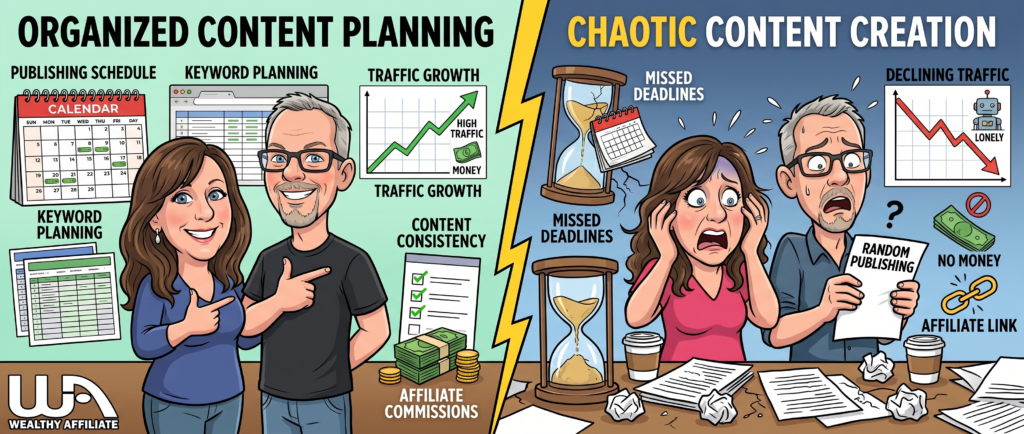
Successful affiliate websites are rarely built by accident. They grow through consistent publishing, strategic planning, and helpful content that serves their audience.
Learning how to combine content creation, SEO, traffic generation, and affiliate marketing can help you build a sustainable online business.
Wealthy Affiliate provides training, tools, hosting, and support to help beginners create content that attracts visitors and generates affiliate commissions.
? Start the Free Wealthy Affiliate Starter Membership
Continue learning:
? How to Create Content That Sells (2026)
? Writing Product Reviews That Drive Sales
? How to Use Video for Affiliate Marketing (2026)
? The Power of Storytelling in Affiliate Marketing
? Leveraging User-Generated Content Effectively
? How to Drive Traffic to a New Affiliate Website (2026)
? Best Affiliate Programs for Beginners
Affiliate Disclaimer
Some links on this page may be affiliate links. If you choose to sign up or purchase through them, I may earn a commission at no additional cost to you. I only recommend products and services I personally use, trust, or believe can genuinely help beginners build an online business.