Written by Donna
Affiliate marketing researcher and founder of AffiliateEducationForBeginners.com
Last updated: May 2026
Reviewed for beginner-friendly accuracy: May 2026
Quick Answer: What Is Affiliate Marketing Terminology?
Affiliate marketing terminology refers to the words, phrases, and metrics used to explain how affiliate marketing works.
Common affiliate marketing terms include:
- affiliate links
- commissions
- conversions
- cookies
- landing pages
- EPC
- CTR
- SEO keywords
One thing I noticed while researching affiliate websites is that many beginners feel overwhelmed at first because affiliate marketing seems like an entirely different language.
The good news is:
once you understand the terminology, affiliate marketing becomes much easier to follow.
Learning these concepts helps beginners:
- understand affiliate dashboards
- improve SEO strategy
- track conversions
- choose better affiliate programs
- create stronger content
Platforms like Wealthy Affiliate help beginners learn these concepts step-by-step while building real affiliate websites and SEO-focused content.
This guide is part of the complete beginner learning system:
? Affiliate Marketing Basics – Building an Online Business
The Affiliate Marketing Basics hub explains:
- affiliate programs
- SEO and traffic generation
- monetization strategies
- beginner mistakes
- realistic expectations
- how affiliate websites grow over time
If you’re trying to understand affiliate marketing terminology, this guide connects directly to the Affiliate Marketing Basics learning cluster.
Affiliate Marketing Terminology: The Basics
Affiliate marketing operates on a simple idea:
you promote products or services and earn commissions when someone completes an action through your affiliate link.
One thing I noticed while researching affiliate websites is that understanding the basic language of affiliate marketing helps beginners feel much more confident learning SEO, traffic generation, and monetization strategies.
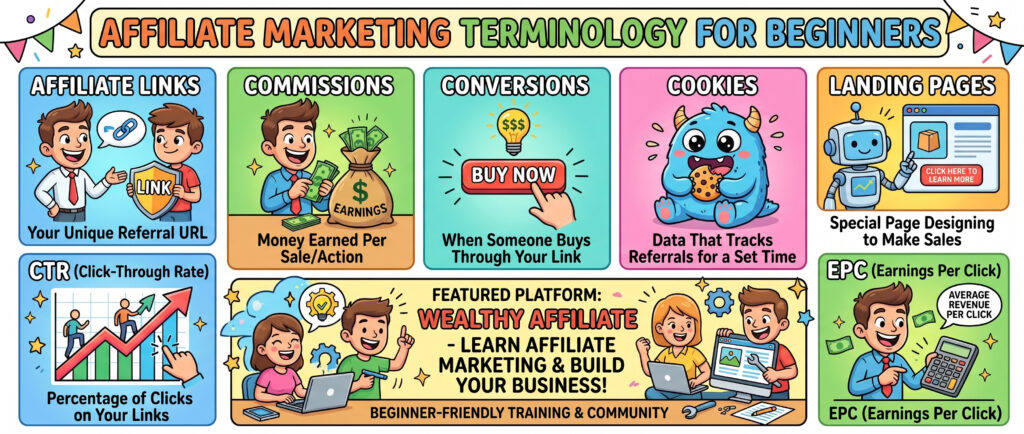
Here are some of the most common terms beginners should learn first:
| Affiliate Marketing Term | Beginner-Friendly Meaning |
|---|---|
| Affiliate | A person promoting products for commissions |
| Merchant / Advertiser | The company selling the product |
| Affiliate Network | A platform managing tracking and payouts |
| Commission | The money earned from referrals |
| Cookie | A tracking file connecting clicks to your account |
| Conversion | A completed action like a sale or signup |
| Landing Page | A page designed to encourage conversions |
| CTR (Click-Through Rate) | Percentage of people clicking your links |
| EPC (Earnings Per Click) | Average earnings per affiliate click |
Understanding terminology is important, but understanding how everything connects together matters even more.
? Affiliate Marketing for Beginners (2026 Guide)
How Affiliate Marketing Actually Works
Affiliate marketing is performance-based marketing.
That means:
you earn commissions only when a specific action happens.
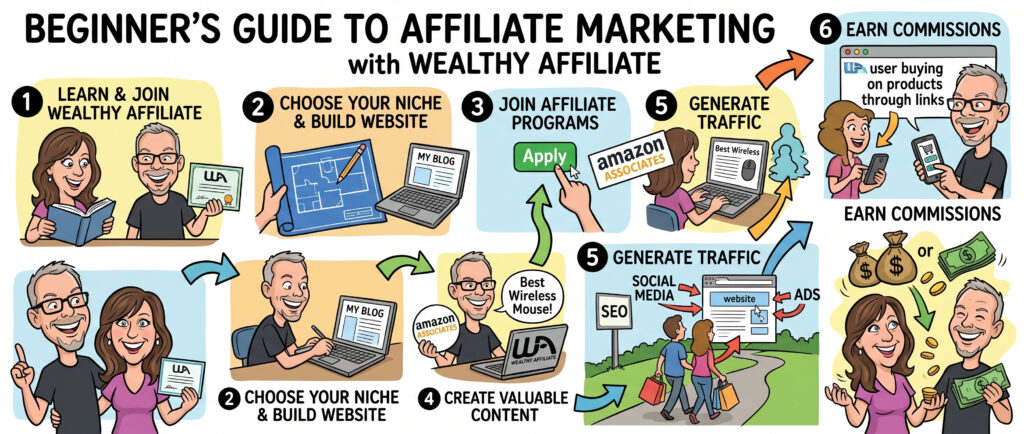
Most affiliate marketing systems work like this:
- You join an affiliate program
- You receive a unique tracking link
- You create helpful content
- Visitors click your affiliate links
- The affiliate platform tracks conversions
- You earn commissions
One thing I noticed while researching successful affiliate websites is that affiliate marketing usually works much better when beginners focus on:
- helpful content
- SEO
- audience trust
- realistic expectations
instead of aggressive promotion.
Platforms like Wealthy Affiliate help beginners combine:
- affiliate training
- website hosting
- SEO education
- keyword research
- content creation
inside one beginner-friendly platform.
? Start the Free Wealthy Affiliate Starter Membership
Common Affiliate Marketing Terms You’ll Keep Seeing
As beginners learn affiliate marketing, certain acronyms and phrases appear repeatedly.
Here are additional terms that are important to understand:
| Affiliate Term | What It Means |
|---|---|
| PPC (Pay Per Click) | Paid for clicks regardless of sales |
| PPL (Pay Per Lead) | Paid when visitors complete a signup or form |
| PPS (Pay Per Sale) | Paid only after completed purchases |
| 2-Tier Program | Earn from your referrals and referred affiliates |
| Tracking ID / Sub ID | Tracks which campaigns generate clicks |
| Vertical | A specific niche or market category |
| Attribution | How commissions are assigned between affiliates |
One thing I noticed while researching affiliate programs is that beginners often improve much faster once they understand how affiliate tracking and conversions actually work.
The Three Main Types of Affiliate Marketing
Affiliate marketing is commonly divided into three main categories:
| Affiliate Marketing Type | Description |
|---|---|
| Unattached Affiliate Marketing | Promoting products without personal experience |
| Related Affiliate Marketing | Promoting products related to your niche |
| Involved Affiliate Marketing | Promoting products you personally use and trust |
One thing I noticed while researching successful affiliate websites is that involved affiliate marketing usually builds:
- stronger trust
- better conversions
- higher audience loyalty
- longer-term SEO growth
because readers respond better to authentic recommendations.
Many beginners build this type of trust faster through structured learning systems like Wealthy Affiliate because they learn how to:
- review products properly
- create helpful tutorials
- build SEO content
- recommend tools naturally
instead of aggressively pushing affiliate links.
Each type of affiliate marketing requires a slightly different approach to trust-building, SEO, and audience engagement.
Understanding Affiliate Marketing Keywords
Keywords are the search phrases people type into Google when looking for:
- tutorials
- reviews
- solutions
- affiliate recommendations
- beginner help
Examples:
- best affiliate programs for beginners
- how affiliate marketing works
- affiliate SEO tips
- how to get traffic to affiliate websites
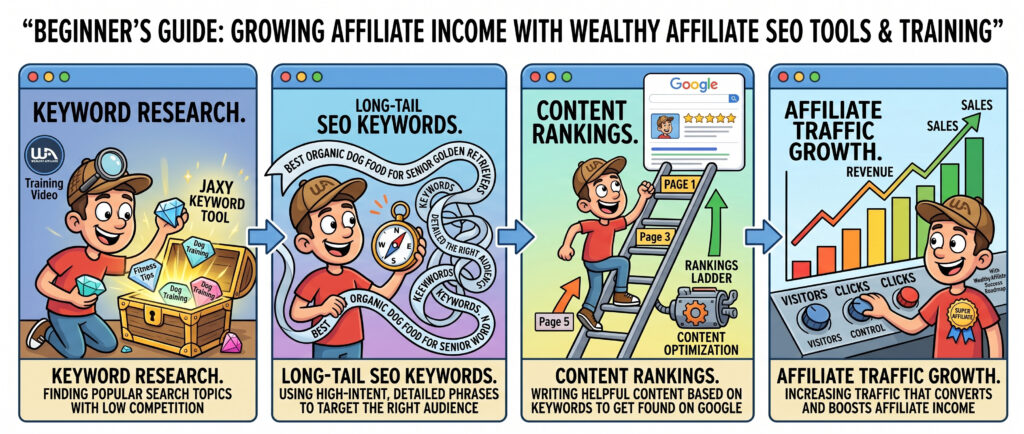
One thing I noticed while researching affiliate websites is that long-tail keywords often help beginners rank faster because:
- competition is lower
- search intent is clearer
- content becomes more targeted
Google’s Search Central SEO Starter Guide explains how search engines discover and rank helpful content over time.
Many affiliate marketers also improve SEO strategy by learning from resources like the Ahrefs Blog and SEMrush Blog.
? SEO for Affiliate Marketing for Beginners
The 80/20 Rule in Affiliate Marketing
The 80/20 rule comes from the Pareto Principle.
In affiliate marketing, it often means:
- 80% of commissions come from 20% of your content
- 80% of traffic comes from a small percentage of pages
- a few affiliate programs often generate most earnings
One thing I noticed while researching affiliate websites is that successful affiliate marketers usually focus heavily on:
- their best-performing content
- strongest traffic sources
- highest-converting affiliate programs
instead of trying to do everything at once.
Can You Make $100 a Day With Affiliate Marketing?
Yes — many affiliate marketers eventually earn $100 a day or more.
But:
affiliate marketing usually takes:
- SEO growth
- content consistency
- traffic generation
- testing and optimization
- audience trust
before stable commissions happen.
One thing I noticed while researching affiliate websites is that many successful affiliates spent months building traffic before earning consistent income.
Affiliate marketing usually becomes much easier once:
- content begins ranking
- SEO compounds
- readers trust recommendations
- traffic becomes predictable
instead of depending on isolated posts.
Learn Affiliate Marketing Step-by-Step
Many beginners struggle because affiliate marketing terminology, SEO, traffic generation, and website building can feel overwhelming at first.
Platforms like Wealthy Affiliate combine beginner training, website hosting, keyword research, SEO education, and affiliate marketing tools in one place.
? Start the Free Wealthy Affiliate Starter Membership
Common Beginner Affiliate Marketing Mistakes
Many beginners struggle because they:
- chase too many affiliate programs
- ignore SEO
- publish inconsistent content
- promote products too aggressively
- expect fast commissions
One thing I noticed while researching affiliate websites is that beginners usually gain momentum much faster once they focus on:
- helpful content
- SEO learning
- audience trust
- realistic expectations
- long-term consistency
instead of shortcuts.
Google’s Helpful Content Guidance also emphasizes creating people-first content designed to genuinely help readers.
The FTC’s Affiliate Disclosure Guidelines explain why transparency and honest recommendations help improve reader trust.
Why Affiliate Marketing Terminology Matters
Affiliate marketing terminology may seem confusing initially, but understanding the language helps beginners:
- make better decisions
- improve SEO strategy
- understand affiliate dashboards
- track conversions
- choose stronger affiliate programs
- build confidence
One thing I noticed while researching affiliate websites is that beginners usually improve much faster once the terminology becomes familiar because:
- SEO concepts make more sense
- tracking data becomes easier to understand
- affiliate strategies become clearer
- content planning improves
Affiliate marketing often becomes much less overwhelming once the language itself starts feeling natural.
Build Your Affiliate Marketing Foundation the Right Way
Many beginners struggle because they try to learn SEO, affiliate marketing, traffic generation, and website building separately.
Platforms like Wealthy Affiliate help beginners learn affiliate marketing while building real websites, SEO-focused content, and long-term traffic.
? Explore the Free Wealthy Affiliate Starter Membership
Frequently Asked Questions About Affiliate Marketing Terminology
What is affiliate marketing terminology?
Affiliate marketing terminology refers to the words, phrases, and metrics used to explain affiliate marketing systems, tracking, commissions, SEO, and traffic generation.
What does EPC mean in affiliate marketing?
EPC stands for Earnings Per Click. It measures the average amount an affiliate earns every time someone clicks an affiliate link.
What are keywords in affiliate marketing?
Keywords are the search terms people type into Google when looking for tutorials, reviews, products, or solutions related to affiliate marketing topics.
What is the 80/20 rule in affiliate marketing?
The 80/20 rule means a small percentage of content, traffic sources, or affiliate programs often generates most affiliate commissions and results.
Can beginners make money with affiliate marketing?
Yes. Many beginners eventually earn affiliate commissions by learning SEO, creating helpful content, building traffic, and staying consistent over time.
Why is understanding affiliate marketing terminology important?
Understanding affiliate marketing terminology helps beginners understand SEO, tracking, conversions, affiliate dashboards, and monetization strategies more effectively.
Continue Learning Inside the Affiliate Marketing Basics Hub
Related Beginner Guides
? How Affiliate Marketing Works – Step-by-Step
? SEO for Affiliate Marketing for Beginners
? Common Beginner Mistakes That Delay Earnings
First Commission & Growth Guides
? How Beginners Actually Make Their First Affiliate Commission Online
? Why Your First Affiliate Commission Takes Longer Than Expected
? Traffic Strategies Before Your First Sale
? Step-by-Step Actions to Earn Your First Dollar Online
Affiliate Disclaimer
Some links on this page may be affiliate links. If you choose to sign up or purchase through them, I may earn a commission at no additional cost to you.