
Written by Donna
Affiliate marketing researcher and founder of AffiliateEducationForBeginners.com
Affiliate Marketing for Beginners
Affiliate marketing is a popular online business model where you earn commissions by recommending products or services through special tracking links. When someone clicks your affiliate link and makes a purchase, you may earn a commission from the sale.
For beginners, affiliate marketing is appealing because you do not need to create products, manage inventory, or handle customer service. Instead, your focus is on creating helpful content, attracting visitors, and recommending products that match your audience’s interests.
One thing I noticed while researching affiliate marketing is that many beginners focus heavily on finding affiliate programs before understanding how websites actually get traffic. Learning SEO and content marketing completely changed how I viewed affiliate marketing because it showed me how helpful content can continue attracting visitors over time.
Quick Answer:
Affiliate marketing works by recommending products or services through special tracking links. When someone clicks your link and makes a purchase, you earn a commission.
If you’re brand new and want a beginner-friendly platform that teaches affiliate marketing step-by-step, platforms like Wealthy Affiliate help beginners learn website building, SEO, content creation, and traffic generation in one place.
If you’re new to affiliate marketing and want to understand the bigger picture first, start with:
Affiliate Marketing Basics – Building an Online Business
That hub explains:
- what affiliate marketing is
- how affiliate commissions work
- common beginner mistakes
- how traffic and SEO fit into affiliate marketing
- how beginners build their first online income streams
What Is Affiliate Marketing, Really?
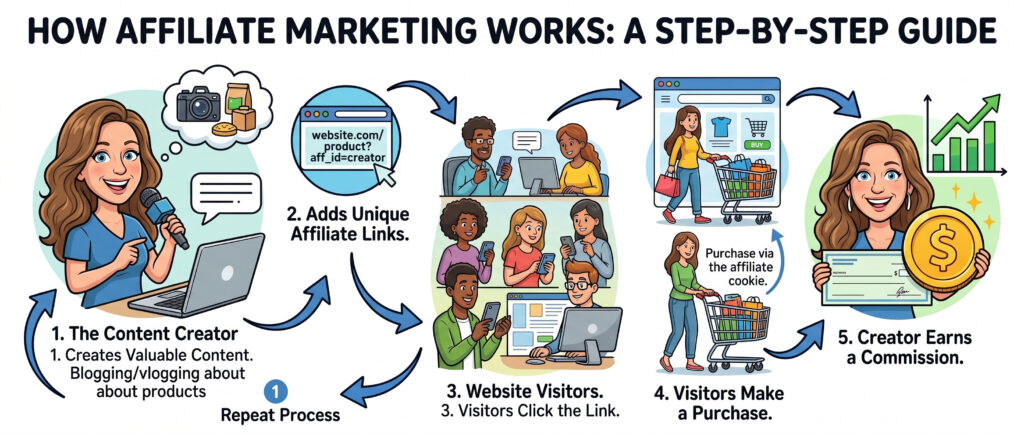
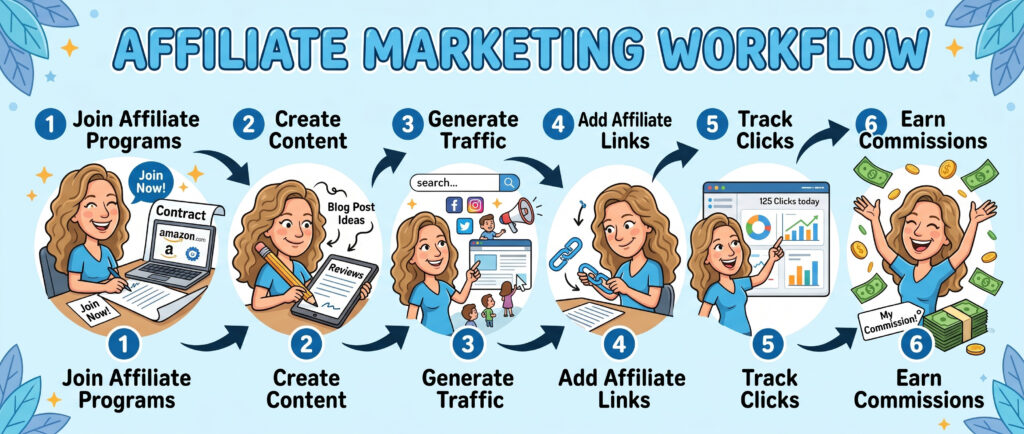
Affiliate marketing is essentially a partnership between a business and a content creator. Companies allow affiliate marketers to promote products or services using special tracking links. When someone clicks a link and completes a purchase or action, the affiliate marketer earns a commission.
Unlike traditional businesses, affiliate marketers typically do not manage products, shipping, customer support, or inventory. Instead, the focus is on helping people find useful products, solutions, tutorials, or recommendations through content.
Affiliate programs are offered by companies of all sizes, including major brands like Amazon, Booking.com, and Nike, along with thousands of smaller online businesses.
Affiliate marketers often share recommendations through:
- blogs
- YouTube videos
- email newsletters
- social media
- niche websites
As traffic grows, affiliate dashboards track clicks, conversions, and commissions so marketers can measure what content performs best.
How Affiliate Marketing Works for Beginners
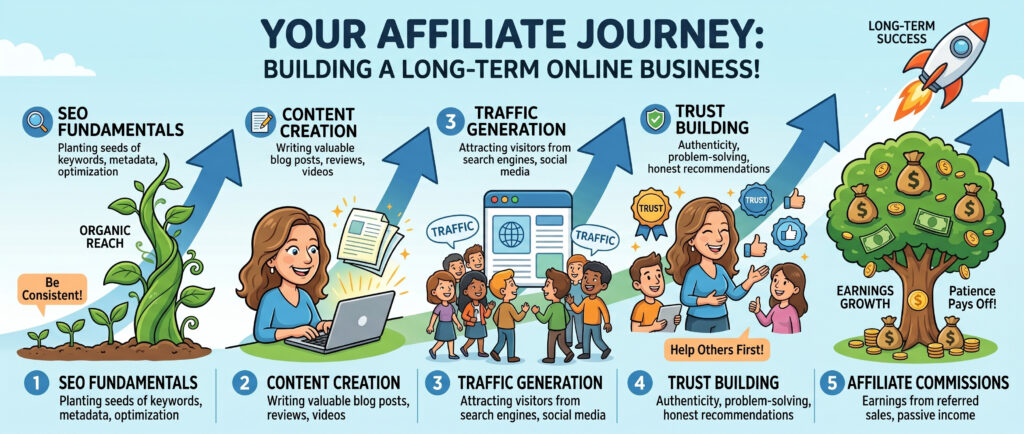
Understanding the affiliate marketing process helps beginners set realistic expectations. While the concept is simple, long-term success usually comes from consistently creating helpful content, learning SEO, and building traffic over time.
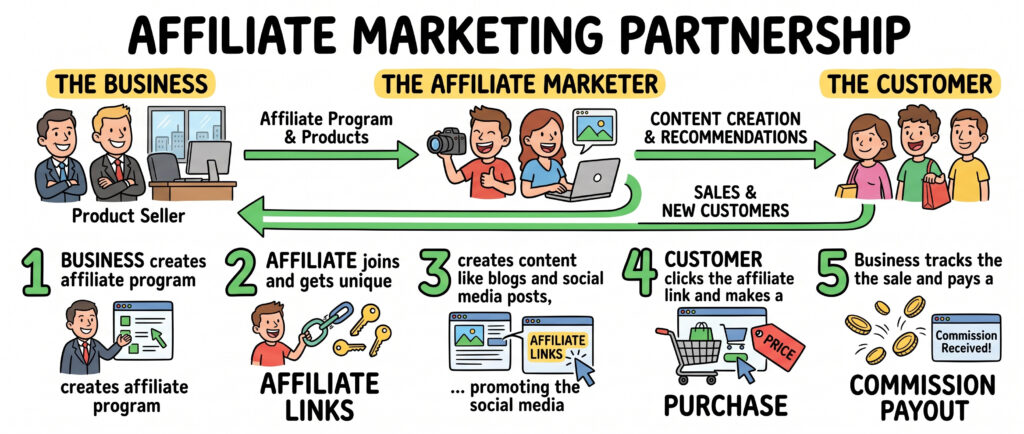
The basic affiliate marketing process usually looks like this:
1. Join an Affiliate Program
Affiliate marketers first apply to affiliate programs or affiliate networks. Once approved, they receive unique affiliate tracking links.
Popular beginner-friendly affiliate platforms include:
2. Choose Products or Services to Promote
Most affiliate marketers focus on products related to their niche or audience interests.
Examples:
- fitness websites promote supplements or workout equipment
- tech blogs recommend software or electronics
- travel creators share hotel and booking tools
- marketing websites promote SEO or website-building platforms
Choosing products that match audience needs usually improves trust and conversions.
3. Create Helpful Content
Affiliate marketers typically create content designed to answer questions or solve problems.
Common content types include:
- tutorials
- product reviews
- comparison articles
- beginner guides
- videos
- resource pages
One thing I noticed while studying successful affiliate websites is that helpful educational content consistently performs better long-term than aggressive sales-focused content.
Many affiliate marketers also learn SEO strategies so their content can attract organic traffic from search engines over time.
SEO for Affiliate Marketing for Beginners
4. Share Affiliate Links Naturally
Affiliate links are usually added naturally within helpful content.
Examples include:
- product recommendations inside tutorials
- tools listed in resource guides
- links inside comparison articles
- recommended platforms inside beginner walkthroughs
Strategic placement helps affiliate links feel helpful instead of overly promotional.
5. Track Traffic, Clicks, and Conversions
Affiliate dashboards and analytics tools help marketers track:
- clicks
- conversions
- traffic sources
- commissions earned
Many affiliate marketers use tools like:
to better understand search traffic and content performance.
6. Earn Commissions
Once someone purchases through an affiliate link, commissions are tracked inside the affiliate dashboard.
Payment methods often include:
- PayPal
- bank transfer
- direct deposit
- affiliate network payouts
Different affiliate programs use different commission structures, payout thresholds, and tracking systems.
Want Help Learning This Step-by-Step?
Affiliate marketing becomes much easier when website building, SEO, content creation, and traffic generation are taught together in one beginner-friendly system.
Platforms like Wealthy Affiliate help beginners build real affiliate websites while learning the process step by step. Start the Free Wealthy Affiliate Starter Membership
Why Affiliate Marketing Appeals to So Many People
Affiliate marketing continues growing because it offers beginners a flexible way to build online income without creating products from scratch.
Some of the biggest advantages include:
| Benefit | Why Beginners Like It |
|---|---|
| Low Startup Costs | No inventory or product creation required |
| Flexibility | Work from home or part-time |
| Scalability | Content can generate traffic long-term |
| Variety | Nearly every niche has affiliate programs |
| No Customer Support | Companies handle fulfillment and support |
Many people start affiliate marketing alongside a full-time job because it allows them to learn gradually while building skills over time.
Some affiliate marketers focus on:
- blogging
- YouTube
- niche websites
- SEO content
- email marketing
Others eventually combine multiple traffic strategies together as their websites grow.
Understanding how traffic works is one of the biggest pieces of affiliate marketing success.
Traffic Generation Strategies – Growing Your Website
How Much Can You Make with Affiliate Marketing?
One of the most common beginner questions is whether affiliate marketing can realistically generate meaningful income. While results vary widely, many beginners aim for milestones like earning their first commission or eventually reaching $100 per day.
Affiliate marketing income depends on several important factors:
| Factor | Why It Matters |
|---|---|
| Niche Selection | Some niches have higher commissions and stronger buyer intent |
| Website Traffic | More targeted visitors create more opportunities for clicks and sales |
| Audience Trust | Helpful recommendations usually convert better over time |
| Content Quality | Tutorials, reviews, and comparisons often perform well |
| SEO Strategy | Search traffic can continue generating clicks long after content is published |
Topics like:
- software
- finance
- technology
- travel
- online business
- marketing tools
often have higher commission potential because products and subscriptions typically pay more.
At the same time, lower-competition niches can sometimes be easier for beginners to grow in because there is less competition from large websites.
One thing I noticed while researching affiliate websites is that successful affiliate marketers usually focus heavily on trust and consistency rather than trying to “go viral.” Many websites grow slowly over time as content, internal links, SEO, and topical authority continue building together.
Some affiliates eventually reach:
- occasional commissions
- steady monthly income
- recurring affiliate revenue
- full-time online income
But most beginners start much smaller while learning:
- SEO
- traffic generation
- content creation
- keyword research
- conversion optimization
Can You Really Make $100 a Day with Affiliate Marketing?
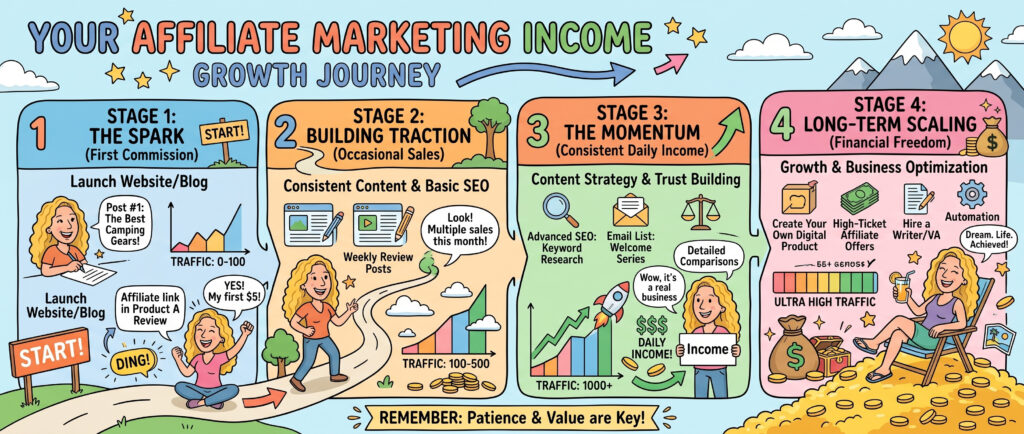
Yes — many affiliate marketers eventually reach $100 per day or more, but it usually requires patience, traffic, and consistent content creation.
Some affiliates achieve this through:
- a blog post ranking in Google
- YouTube tutorials
- Pinterest traffic
- email marketing
- product comparison content
- recurring commission programs
For most beginners, affiliate marketing works more like a long-term business than a quick-income shortcut.
That is why learning SEO and traffic generation becomes so important over time.
Traffic Generation Strategies – Growing Your Website
SEO for Affiliate Marketing for Beginners
See How Beginners Build Affiliate Income Step-by-Step
Most affiliate marketers who eventually earn consistent income learn SEO, traffic generation, keyword research, and content creation gradually over time.
Platforms like Wealthy Affiliate help beginners build real affiliate websites while learning how traffic and affiliate monetization work together. Explore the Free Wealthy Affiliate Starter Membership
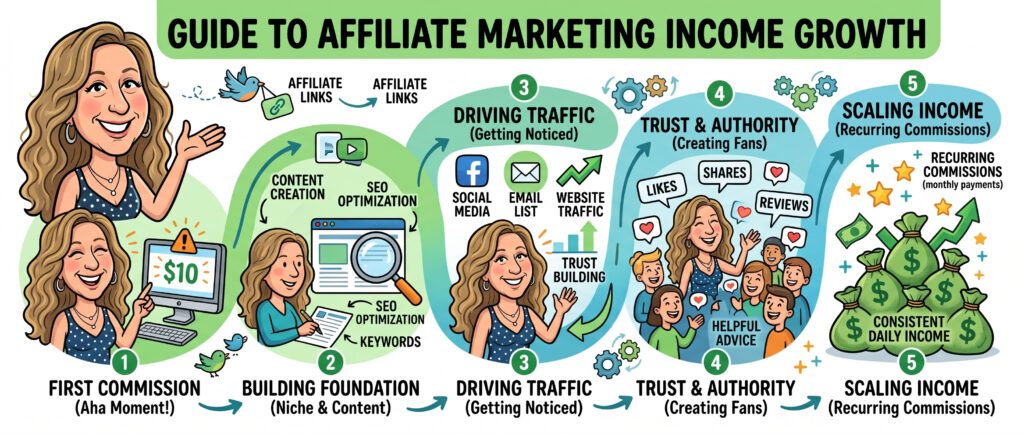
The 80/20 Rule in Affiliate Marketing
The 80/20 rule, also called the Pareto Principle, appears frequently in affiliate marketing.
In many cases:
- roughly 80% of affiliate income comes from 20% of content
- a few pages generate most commissions
- a small number of traffic sources drive most conversions
One thing I noticed while studying affiliate websites is that successful affiliates usually identify their best-performing content and continue improving it instead of constantly starting over with random new topics.
For example:
- one review article may generate most commissions
- one SEO article may attract most search traffic
- one email sequence may produce most clicks
This is why analytics and tracking tools become important as websites grow.
Successful affiliate marketers often:
- update top-performing content regularly
- improve internal links
- create related cluster articles
- expand successful keyword topics
- focus on high-converting traffic sources
Rather than guessing, performance data helps affiliate marketers make smarter decisions over time. In addition, tracking your top-performing traffic sources and focusing on those can make your progress more predictable.
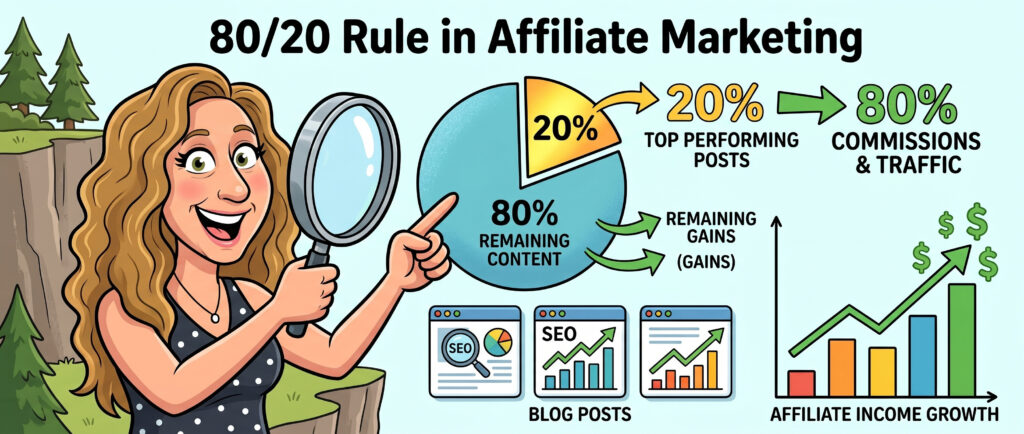
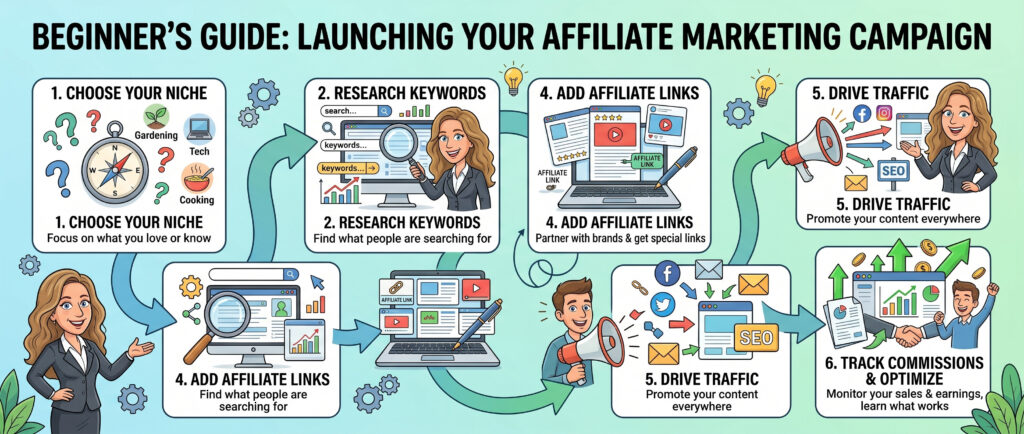
Step-by-Step: Launching Your First Affiliate Campaign
Getting started with affiliate marketing is often simpler than beginners expect. Most affiliate marketers begin with a small website, a content platform, or a niche-focused social channel.
Here’s a beginner-friendly overview of how affiliate campaigns usually work:
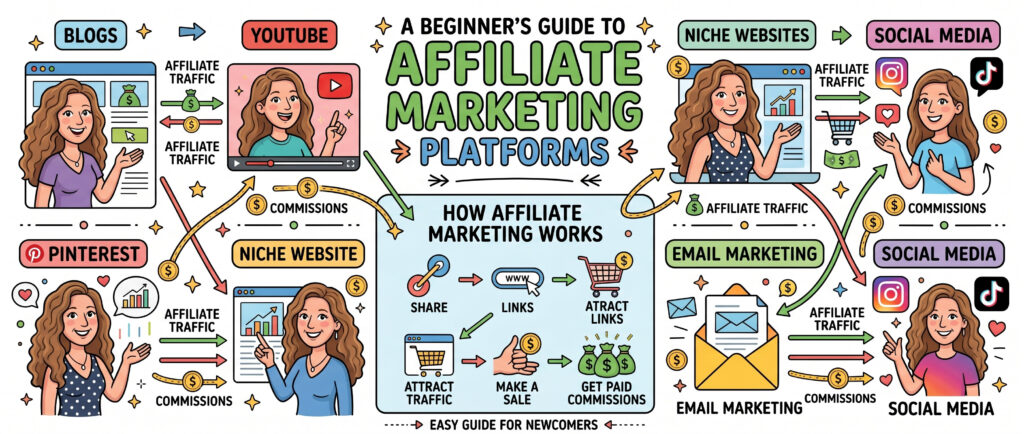
1. Choose a Platform
Affiliate marketers typically build content using:
- blogs
- YouTube channels
- niche websites
- social media
- email newsletters
Many beginners start with blogs because SEO content can continue generating traffic long-term.
2. Join Affiliate Programs
After choosing a niche or platform, affiliate marketers apply to affiliate programs.
Popular beginner-friendly options include:
Some affiliate programs focus on:
- physical products
- software
- digital products
- subscriptions
- online services
Build Your First Affiliate Website Step-by-Step
Many beginners struggle because they try to piece together affiliate marketing from random videos and disconnected tutorials.
Platforms like Wealthy Affiliate help beginners learn website building, affiliate marketing, SEO, and traffic generation together while building a real website. Start the Free Wealthy Affiliate Starter Membership
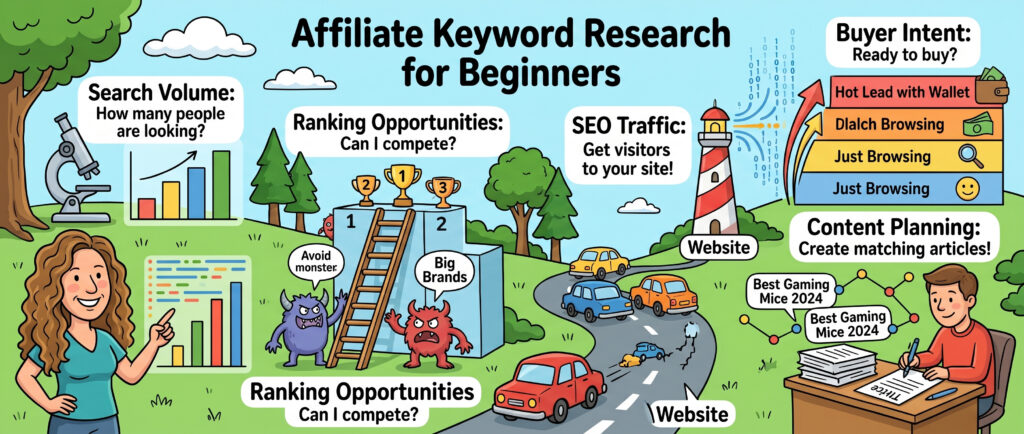
3. Research Keywords and Audience Questions
Many successful affiliate websites rely heavily on SEO and keyword research.
Tools like:
help affiliate marketers understand:
- what people search for
- keyword competition
- traffic potential
- ranking opportunities
Keyword Research for Affiliate Marketing
4. Create Helpful Content
Affiliate marketers usually create content designed to answer questions or solve problems.
Examples include:
- tutorials
- beginner guides
- product reviews
- comparisons
- “best tools” lists
- problem-solving content
Helpful content tends to perform better long-term than aggressive sales-focused pages.
5. Add Affiliate Links Naturally
Affiliate links are typically placed within useful content where they feel relevant and helpful.
Examples:
- recommending tools inside tutorials
- linking products inside reviews
- comparing platforms in educational articles
One thing I noticed while studying successful affiliate websites is that overly aggressive affiliate placement often hurts trust and user experience.
6. Promote and Track Performance
Affiliate marketers often combine:
- SEO
- email marketing
- YouTube
- social media
- internal linking
to grow traffic steadily over time.
Tracking tools help monitor:
- clicks
- rankings
- traffic sources
- conversions
- top-performing pages
Over time, this data helps affiliate marketers improve what is already working.
Challenges Beginners Often Face in Affiliate Marketing
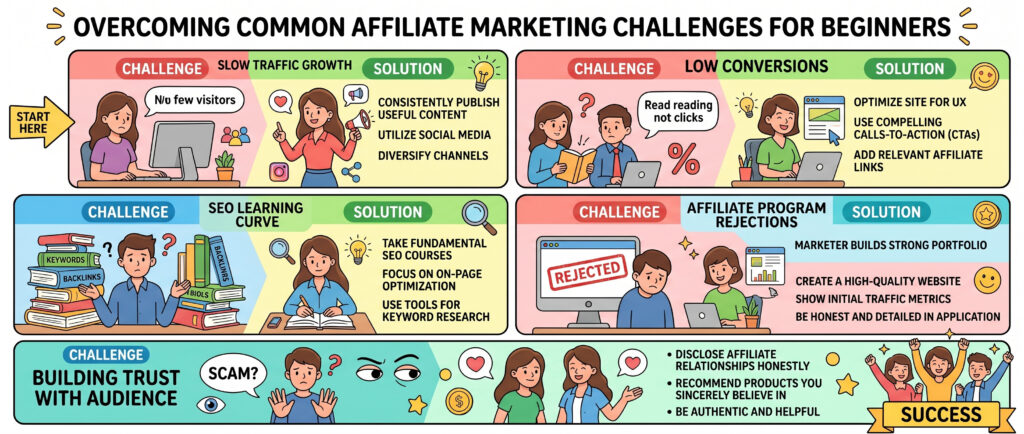
Affiliate marketing can create real opportunities, but beginners often run into obstacles while learning how traffic, SEO, and conversions work together.
Some of the most common beginner challenges include:
| Challenge | Beginner-Friendly Solution |
|---|---|
| Slow Traffic Growth | Focus on SEO, tutorials, and consistent publishing |
| Low Conversions | Improve trust, content quality, and affiliate placement |
| Affiliate Program Rejections | Build helpful content before applying |
| Information Overload | Follow structured step-by-step training |
| Unrealistic Expectations | Focus on long-term growth instead of quick income |
One thing I noticed while researching affiliate marketing is that beginners often underestimate how long traffic takes to build. Many successful affiliate websites grow gradually over time as SEO, internal links, topical authority, and helpful content continue compounding together.
Slow Traffic Growth
Traffic growth is one of the biggest frustrations for beginners.
Search traffic often takes time because:
- Google needs to discover and index content
- websites build authority gradually
- SEO rankings improve slowly over time
Helpful content types that often perform well include:
- tutorials
- beginner guides
- product comparisons
- problem-solving articles
- SEO-focused content
Consistency matters far more than publishing a few random articles and expecting instant results.
Traffic Generation Strategies – Growing Your Website
Low Conversion Rates
Sometimes traffic increases, but affiliate clicks or commissions remain low.
This often improves by:
- testing better affiliate offers
- improving content quality
- adding clearer calls-to-action
- placing affiliate links more naturally
- building more audience trust
One thing I noticed while studying successful affiliate websites is that overly aggressive affiliate placement often reduces trust and lowers conversions long-term.
Learn Affiliate Marketing Without Guessing
Many beginners struggle because they try to learn SEO, affiliate marketing, traffic generation, and content creation separately.
Platforms like Wealthy Affiliate help beginners learn the entire process step-by-step while building a real affiliate website. Explore the Free Wealthy Affiliate Starter Membership
Affiliate Program Rejections
Some affiliate programs reject beginners who have:
- little content
- no traffic
- unfinished websites
Building a small foundation of helpful articles before applying often improves approval chances.
Many affiliate marketers start with beginner-friendly affiliate programs first before applying to larger or more competitive programs later.
How to Choose the Right Affiliate Program
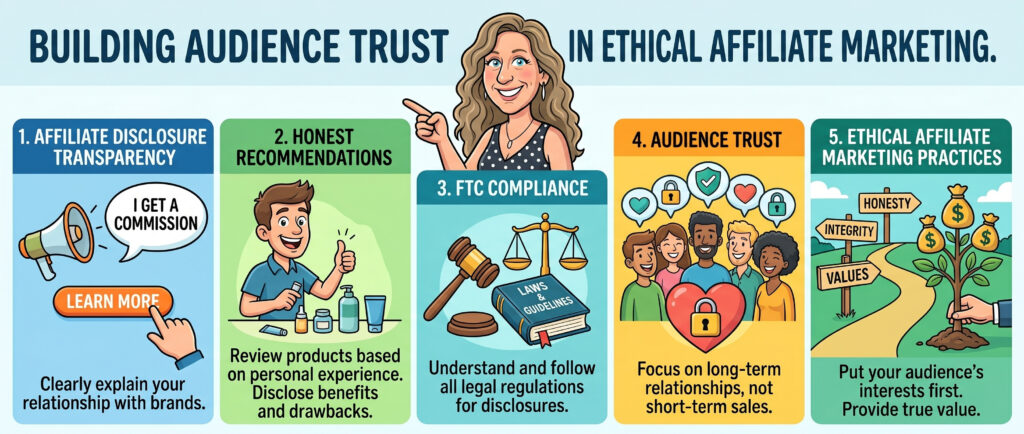
FTC Rules and Trust
Affiliate marketers must disclose affiliate relationships clearly.
The FTC Affiliate Disclosure Guidelines explain how affiliate disclosures help maintain transparency and trust with readers.
Long-term affiliate success usually depends heavily on:
- realistic expectations
- trust
- honesty
- helpful recommendations
Helpful Tools for Affiliate Marketers
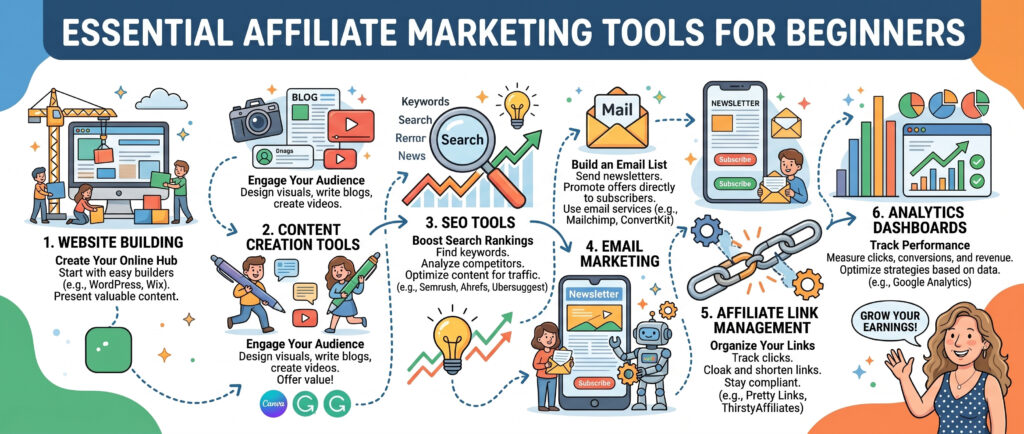
Affiliate marketers often use a combination of tools to help with:
- keyword research
- SEO
- analytics
- affiliate link management
- content creation
- email marketing
Many beginners start with free tools first, then expand into advanced platforms as traffic grows.
Beginner-Friendly Affiliate Marketing Tools
| Tool Type | What It Helps With |
|---|---|
| Website Platforms | Building affiliate websites |
| SEO Tools | Keyword research and rankings |
| Analytics Tools | Traffic and visitor tracking |
| Email Marketing Tools | Audience building |
| Link Management Plugins | Organizing affiliate links |
| Graphic Design Tools | Social media and blog visuals |
Commonly Used Affiliate Marketing Tools
Some popular affiliate marketing tools include:
- Wealthy Affiliate
- Pretty Links
- ThirstyAffiliates
- Google Analytics
- ConvertKit
- Mailchimp
- Canva
- Ahrefs Blog
- SEMrush Blog
These tools help affiliate marketers:
- analyze traffic
- improve SEO
- manage affiliate links
- track conversions
- create content more efficiently
One thing I noticed while researching affiliate websites is that beginners often become overwhelmed trying to use too many tools too early. Most successful affiliate marketers gradually expand their toolset as their websites and traffic grow.
Learn Affiliate Marketing Tools Step-by-Step
Many beginners become overwhelmed trying to learn SEO, keyword research, website building, and affiliate marketing from scattered tools and disconnected tutorials.
Platforms like Wealthy Affiliate combine beginner training, website tools, keyword research, hosting, and affiliate education in one place. Start the Free Wealthy Affiliate Starter Membership
Advanced Affiliate Marketing Strategies
As affiliate websites grow, many marketers eventually expand beyond basic affiliate links and beginner content strategies.
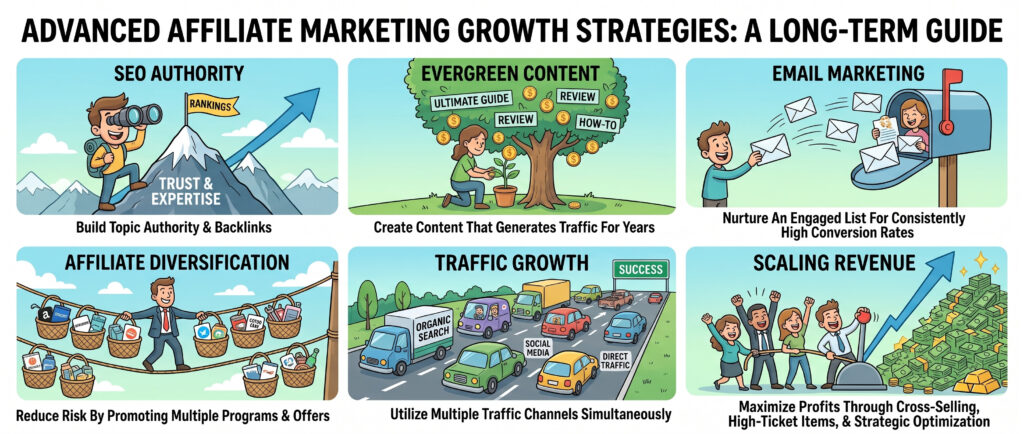
Some long-term affiliate marketing strategies include:
| Strategy | Purpose |
|---|---|
| SEO Authority Building | Generate long-term organic traffic |
| Email List Growth | Build recurring traffic and relationships |
| Evergreen Content | Create content that performs long-term |
| Multiple Affiliate Programs | Reduce dependence on one platform |
| Content Clusters | Build topical authority |
| Paid Ads | Scale traffic after identifying winning offers |
One thing I noticed while researching successful affiliate websites is that most high-earning affiliate marketers treat affiliate marketing like a long-term business instead of a quick-income shortcut.
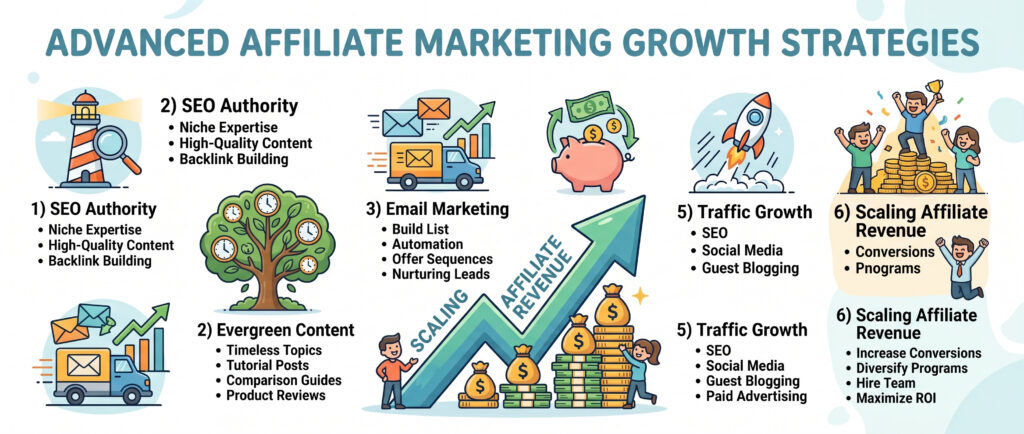
Building SEO Authority
Many successful affiliate marketers focus heavily on:
- keyword research
- internal linking
- content clusters
- backlink building
- SEO optimization
Long-form tutorials, beginner guides, comparisons, and educational content often perform especially well in search engines over time.
SEO for Affiliate Marketing for Beginners
Growing an Email List
Email marketing helps affiliate marketers build relationships directly with readers.
Many affiliates use email lists to:
- share new content
- recommend products
- build trust
- promote tutorials
- generate repeat traffic
Creating Evergreen Content
Evergreen content continues attracting visitors long after publishing.
Examples include:
- beginner tutorials
- “best tools” guides
- comparison articles
- SEO tutorials
- problem-solving content
Many affiliate marketers eventually build large content libraries that continue generating search traffic over time.
Diversifying Affiliate Programs
Relying on only one affiliate program can create risk if:
- commissions change
- programs close
- payout structures shift
Many experienced affiliate marketers diversify across:
- software programs
- affiliate networks
- recurring commissions
- physical products
- digital products
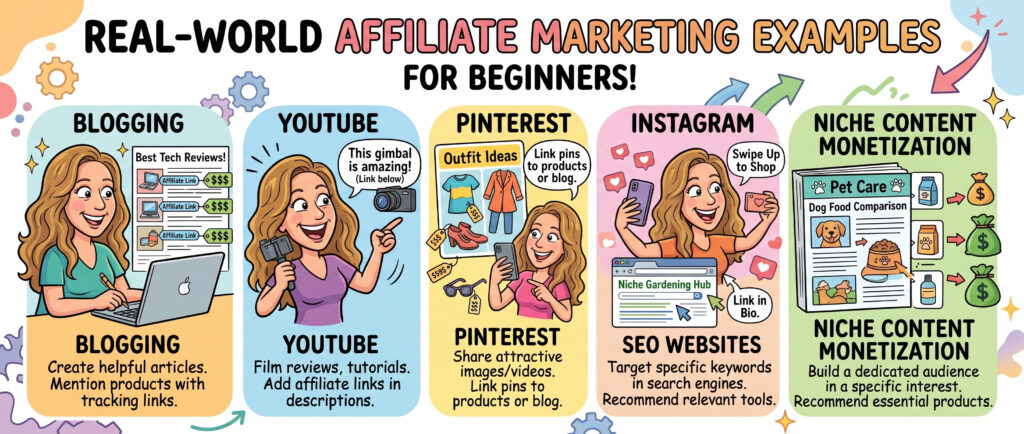
Real-World Examples of Affiliate Marketing
Affiliate marketing works across many different platforms and niches.
Examples include:
| Platform | Example |
|---|---|
| Blogging | Product reviews, tutorials, comparison articles |
| YouTube | Product demos and walkthrough videos |
| Traffic generation for blog content | |
| Product recommendations and tutorials | |
| Niche Websites | SEO-focused informational content |
One thing I noticed while researching affiliate websites is that smaller niche-focused audiences often convert better than large broad audiences because recommendations feel more targeted and trustworthy.
Many affiliate marketers begin with:
- a small niche website
- a YouTube channel
- Pinterest traffic
- beginner SEO content
- educational tutorials
Frequently Asked Questions About Affiliate Marketing
What is affiliate marketing?
Affiliate marketing is a business model where people earn commissions by recommending products or services through special tracking links.
How does affiliate marketing work for beginners?
Beginners usually start by joining affiliate programs, creating helpful content, adding affiliate links, and learning how traffic and SEO work together.
Can beginners really make money with affiliate marketing?
Yes, many beginners eventually earn commissions through affiliate marketing, although traffic and SEO growth often take time.
Can you make $100 a day with affiliate marketing?
Yes. Some affiliate marketers eventually reach $100 per day or more by combining SEO, traffic generation, content marketing, and trust-building strategies.
What is the 80/20 rule in affiliate marketing?
The 80/20 rule suggests that a small percentage of content or traffic sources often generates most affiliate commissions.
How long does affiliate marketing take to work?
Affiliate marketing timelines vary, but many beginners spend several months learning SEO, content creation, and traffic generation before seeing consistent results.ck.
Getting Started the Right Way
Affiliate marketing becomes much easier when beginners learn:
- SEO
- keyword research
- traffic generation
- content creation
- affiliate strategy
as part of one connected system.
One thing I noticed while researching affiliate marketing is that many beginners struggle because they try to piece everything together from random videos, scattered tutorials, and conflicting advice online.
Platforms like Wealthy Affiliate help beginners learn:
- website building
- SEO
- content marketing
- affiliate strategy
- keyword research
- traffic generation
step-by-step while building a real affiliate website.
Start Building Your Affiliate Website Step-by-Step
Many beginners struggle because they try to learn affiliate marketing, SEO, content creation, and traffic generation separately.
Platforms like Wealthy Affiliate combine training, website hosting, keyword research tools, and beginner-friendly guidance in one place so you can learn while building a real affiliate website. Start the Free Wealthy Affiliate Starter Membership
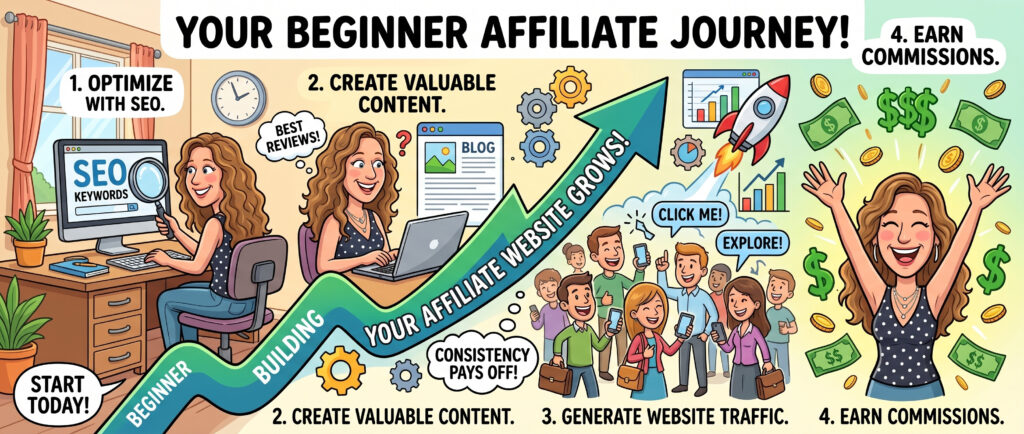
Affiliate marketing offers real opportunities for beginners willing to learn, experiment, and build gradually over time.
7 Affiliate Programs Beginners Can Actually Make Money With (2026)
Traffic Strategies Before Your First Sale
Realistic Timelines for Your First Dollar Online
Common Beginner Mistakes That Delay Affiliate Marketing Earnings
Affiliate Disclosure
Some links on this page may be affiliate links. If you choose to purchase through them, I may earn a commission at no additional cost to you. I only recommend tools and platforms that provide value for beginners learning affiliate marketing.