
Written by Donna
Affiliate marketing researcher and founder of AffiliateEducationForBeginners.com
Last updated: March 2026
Reviewed for beginner-friendly accuracy: March 2026
Quick Answer: Is Affiliate Marketing a Scam?
No — affiliate marketing itself is a legitimate business model used by major companies worldwide.
However, many beginners become confused because the internet is filled with:
- unrealistic income claims
- scammy “guru” marketing
- fake success promises
- misleading affiliate tactics
Real affiliate marketing usually involves:
- SEO
- content creation
- traffic generation
- audience trust
- long-term consistency
rather than overnight success.
One thing I noticed while researching affiliate marketing is that beginners often confuse affiliate marketing itself with the misleading tactics used by low-quality marketers online.
This guide is part of the complete beginner learning system:
👉 Affiliate Marketing Basics – Building an Online Business
The Affiliate Marketing Basics hub explains:
- affiliate programs
- SEO and traffic generation
- monetization strategies
- beginner mistakes
- realistic expectations
- how affiliate websites grow over time
If you’re new to affiliate marketing, the hub walks through the entire process step-by-step.
What Affiliate Marketing Actually Is
Affiliate marketing is a business model where people earn commissions by recommending products or services through tracked affiliate links.
Large companies like:
- Amazon
- Walmart
- Target
- software companies
- hosting companies
- education platforms
all use affiliate marketing programs to reach new customers.
Affiliate marketers usually create:
- tutorials
- reviews
- beginner guides
- comparisons
- educational content
that help audiences make informed decisions.
When someone clicks an affiliate link and makes a purchase, the affiliate may earn a commission.
One thing I noticed while researching affiliate websites is that successful affiliate marketers usually focus heavily on:
- helping people solve problems
- creating useful content
- building trust over time
instead of aggressively trying to “sell” people constantly.
👉 What Is Affiliate Marketing?
👉 How Affiliate Marketing Works Step-by-Step
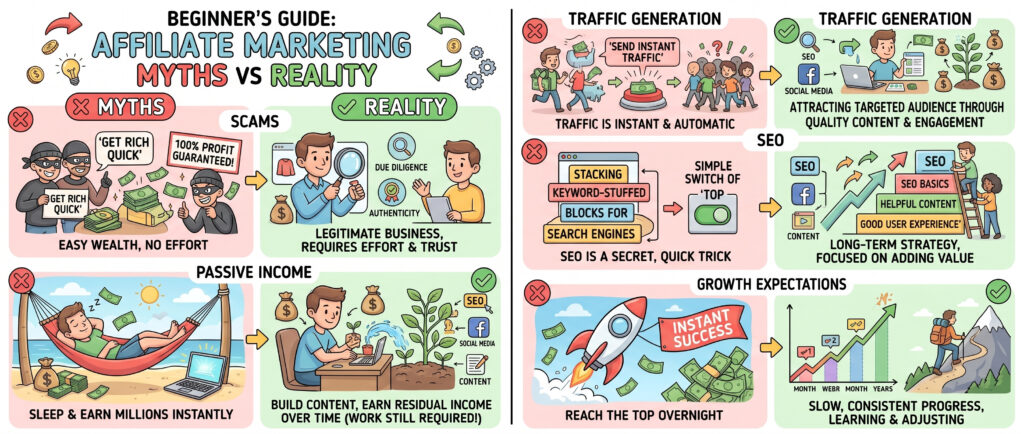
Common Affiliate Marketing Myths
| Myth | Reality |
|---|---|
| Affiliate marketing is easy money | It requires consistent work and learning |
| You need a huge audience | Small targeted audiences can work well |
| Affiliate marketing is passive income | Ongoing optimization is usually required |
| Affiliate marketing is outdated | The industry continues evolving |
| All affiliate programs are the same | Programs vary greatly in quality and payouts |
Many beginners first discover affiliate marketing through:
- YouTube videos
- TikTok clips
- social media ads
- “make money online” content
Unfortunately, those sources often oversimplify how affiliate marketing actually works.
Myth #1: Affiliate Marketing Is Easy Money
Affiliate marketing is often advertised online as a fast way to earn passive income with very little effort.
In reality, successful affiliate marketers usually spend significant time learning:
- SEO
- content marketing
- keyword research
- traffic generation
- audience building
Most affiliate websites grow gradually over time as:
- content expands
- internal links strengthen topical authority
- search rankings improve
- audience trust increases
One thing I noticed while researching successful affiliate marketers is that consistency usually matters far more than “viral” shortcuts.
👉 SEO for Affiliate Marketing for Beginners
👉 Traffic Generation Strategies – Growing Your Website
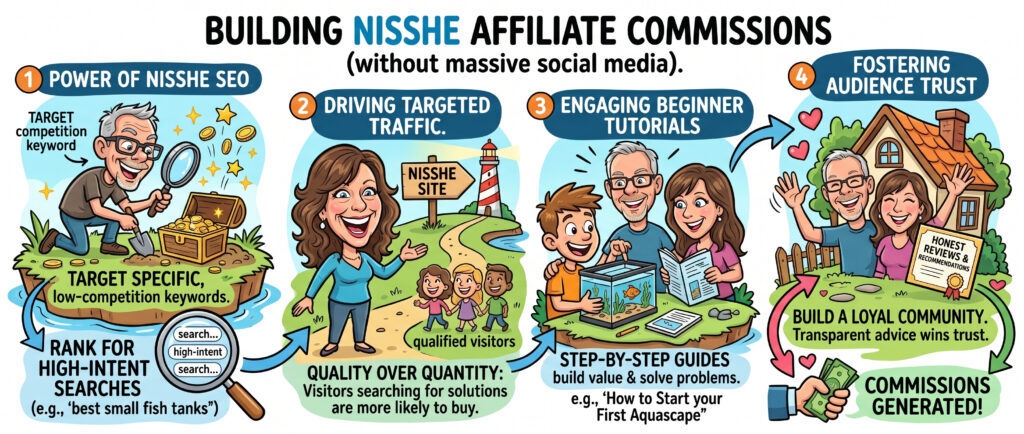
Myth #2: You Need a Huge Audience
Many beginners assume affiliate marketing only works for influencers with massive followings.
That is not true.
Small niche websites often perform extremely well because they focus on:
- targeted search traffic
- specific audience problems
- high-intent keywords
- detailed educational content
For example:
- product comparisons
- software tutorials
- beginner guides
- “best tools” articles
can generate affiliate commissions even with smaller traffic numbers.
One thing I noticed while researching affiliate websites is that highly targeted audiences often convert better than broad untargeted traffic.
Myth #3: Affiliate Marketing Is Passive Income
Affiliate marketing can eventually generate recurring traffic and commissions, but it usually requires ongoing work.
Successful affiliate marketers often continue:
- updating content
- improving SEO
- testing affiliate offers
- building email lists
- publishing new articles
- tracking rankings and traffic
Google’s SEO Starter Guide explains how search engines discover, understand, and rank website content over time.
Many affiliate marketers also use resources like the Ahrefs Blog and SEMrush Blog to learn SEO and traffic generation strategies.
One thing I noticed while studying affiliate websites is that the most successful sites usually treat affiliate marketing like a long-term business rather than a quick-income shortcut.
Learn Affiliate Marketing Step-by-Step
Many beginners struggle because they try to learn SEO, traffic generation, content creation, and affiliate marketing separately.
Platforms like Wealthy Affiliate combine beginner training, website hosting, keyword research, and affiliate marketing tools in one place.
Start the Free Wealthy Affiliate Starter Membership
Myth #4: Affiliate Marketing Is Outdated
Affiliate marketing continues evolving alongside:
- search engines
- AI search
- YouTube
- social media
- email marketing
- content platforms
Modern affiliate marketing now includes:
- SEO content
- AI-assisted research
- comparison content
- YouTube tutorials
- Pinterest traffic
- niche content clusters
One thing I noticed while researching affiliate marketing trends is that affiliate websites focused on helpful educational content continue performing much better long-term than hype-focused websites.
👉 Content Marketing Strategies for Affiliate Success
👉 Internal Linking Strategies for Affiliate Websites
Myth #5: All Affiliate Programs Are the Same
Affiliate programs vary significantly in:
- commission rates
- payout structures
- support quality
- cookie duration
- approval requirements
- reputation
Some affiliate programs focus heavily on:
- recurring commissions
- software subscriptions
- digital products
- hosting services
- educational platforms
while others rely more heavily on:
- low-ticket products
- one-time payouts
- mass-volume traffic
One thing I noticed while researching affiliate programs is that beginner-friendly affiliate platforms usually focus more on education, transparency, and realistic expectations rather than hype-driven marketing promises.
👉 How to Choose the Right Affiliate Program
👉 Best Affiliate Programs for Beginners
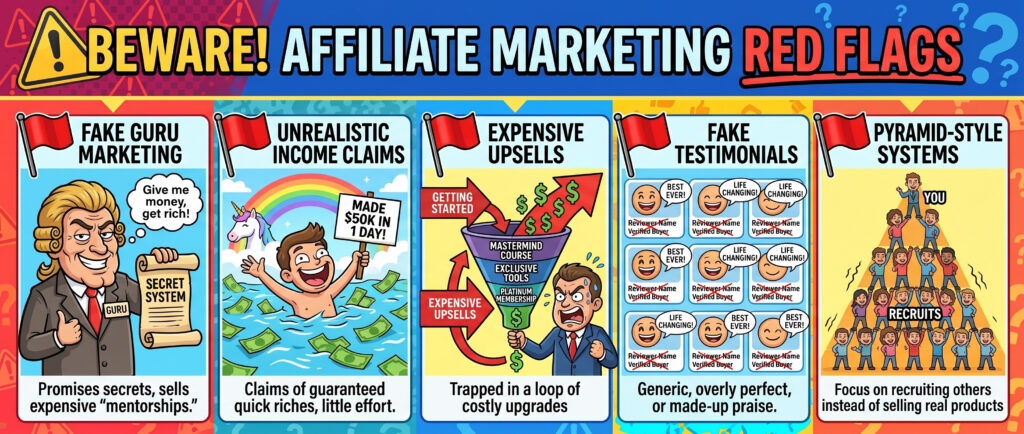
Common Affiliate Marketing Red Flags
Affiliate marketing is legitimate, but some online programs and marketers use misleading tactics.
| Warning Sign | Why It’s a Problem |
|---|---|
| Unrealistic income promises | Creates false expectations |
| Expensive “secret systems” | Often rely on hype |
| Fake testimonials | Misleading marketing |
| No clear business model | Lack of transparency |
| Aggressive upsells | Focuses on selling beginners instead of helping them |
Some common affiliate marketing scams include:
- cookie stuffing
- fake leads or purchases
- pyramid-style compensation systems
- fake guru marketing
- misleading screenshots or earnings claims
The FTC Affiliate Disclosure Guidelines explain why transparency and honest recommendations matter in affiliate marketing.
One thing I noticed while researching online business scams is that legitimate affiliate platforms usually focus on:
- education
- skill building
- SEO
- content creation
- realistic expectations
instead of promising instant wealth.
👉 Online Business Scams & Warnings
Why Many Beginners Struggle with Affiliate Marketing
Many beginners fail at affiliate marketing because they enter with unrealistic expectations.
Common beginner struggles include:
| Challenge | Beginner-Friendly Solution |
|---|---|
| Unrealistic expectations | Focus on long-term growth |
| Low traffic | Learn SEO and content marketing |
| Inconsistent publishing | Build content regularly |
| Choosing poor niches | Research audience demand |
| Ignoring analytics | Track clicks and rankings |
Google’s Search Console Help Documentation also explains how website owners can monitor search performance, indexing, and website visibility.
One thing I noticed while researching affiliate websites is that successful affiliate marketers usually improve gradually through:
- testing
- analytics
- SEO
- internal linking
- audience trust
- content updates
rather than trying to “hack” quick success.
👉 Keyword Research for Affiliate Marketing
👉 On-Page SEO Techniques for Affiliate Websites
Understanding the 80/20 Rule in Affiliate Marketing
The 80/20 rule, also called the Pareto Principle, appears frequently in affiliate marketing.
In many cases:
- 80% of affiliate income comes from 20% of content
- a few pages generate most commissions
- a small number of traffic sources drive most conversions
One thing I noticed while researching affiliate websites is that successful affiliate marketers usually identify their best-performing content and continue improving it instead of constantly chasing random new ideas.
Many successful affiliate marketers regularly:
- update top-performing pages
- improve internal links
- expand successful keyword topics
- optimize conversion-focused articles
- create related cluster content
That long-term optimization process is often what separates successful affiliate websites from abandoned ones.
Can You Really Make $10,000 Per Month with Affiliate Marketing?
Yes — some affiliate marketers eventually build five-figure monthly affiliate businesses.
However, this usually requires:
- SEO authority
- consistent publishing
- targeted traffic
- content systems
- audience trust
- analytics tracking
- long-term consistency
Many successful affiliate marketers focus heavily on:
- evergreen SEO content
- product comparisons
- tutorials
- email marketing
- recurring commissions
- content clusters
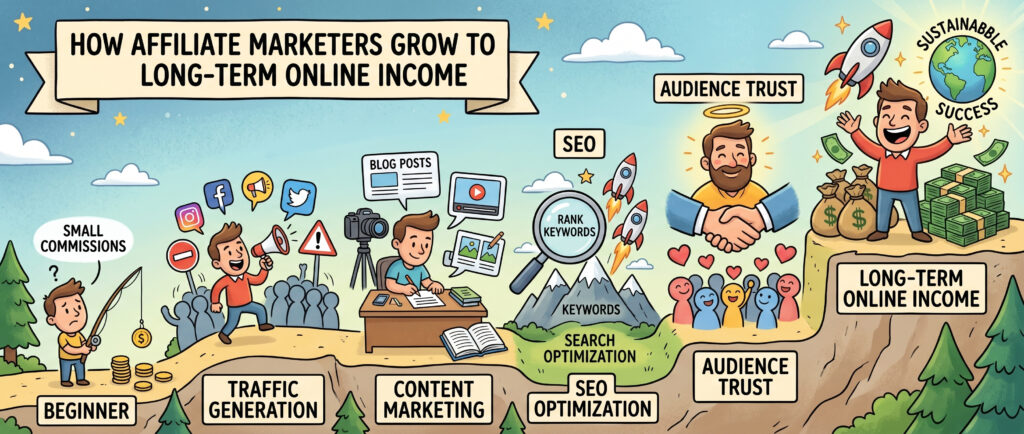
One thing I noticed while studying affiliate websites is that long-term affiliate income usually grows gradually rather than exploding overnight.
👉 SEO for Affiliate Marketing for Beginners
👉 Content Marketing Strategies for Affiliate Success
Is Affiliate Marketing Worth It?
Affiliate marketing is not a “get rich quick” system.
But for people willing to:
- learn SEO
- build content
- improve traffic
- create audience trust
- stay consistent
affiliate marketing can become:
- a flexible side income
- a scalable online business
- a long-term digital income strategy
Many beginners also value the digital skills affiliate marketing teaches, including:
- SEO
- content marketing
- analytics
- audience building
- conversion optimization
- keyword research
Those skills often transfer into many other online business opportunities over time.
Build Your Affiliate Website the Right Way
Many beginners struggle because they try to piece together affiliate marketing, SEO, traffic generation, and website tools from scattered online advice.
Platforms like Wealthy Affiliate help beginners learn affiliate marketing step-by-step while building a real website and growing long-term traffic.
Explore the Free Wealthy Affiliate Starter Membership
Frequently Asked Questions About Affiliate Marketing Myths
Is affiliate marketing legit?
Yes. Affiliate marketing is a legitimate business model used by major companies worldwide to promote products and services online.
Is affiliate marketing a scam?
Affiliate marketing itself is legitimate, but some programs or marketers use misleading tactics and unrealistic income promises.
Why do beginners fail at affiliate marketing?
Many beginners struggle because they expect fast income, underestimate SEO and traffic growth, or quit before content and rankings develop.
Is affiliate marketing passive income?
Affiliate marketing can generate recurring traffic and commissions, but successful affiliate websites usually require ongoing updates and optimization.
Can beginners really make money with affiliate marketing?
Yes. Many beginners eventually earn affiliate commissions through SEO, tutorials, comparison content, and audience trust.
What are affiliate marketing red flags?
Common warning signs include unrealistic income claims, fake testimonials, expensive upsells, vague business models, and aggressive “guru” marketing.
Start Building Your Affiliate Website Step-by-Step
Understanding affiliate marketing myths is only the beginning. Long-term success usually comes from learning SEO, traffic generation, content creation, and audience trust together.
Platforms like Wealthy Affiliate help beginners build affiliate websites while learning the skills needed to grow long-term organic traffic. Start the Free Wealthy Affiliate Starter Membership
Continue Learning Inside the Affiliate Marketing Basics Hub
Related Beginner Guides
👉 What Is Affiliate Marketing?
👉 How to Choose the Right Affiliate Program
👉 Understanding Affiliate Marketing Terminology
👉 Benefits of Becoming an Affiliate Marketer
👉 Mistakes to Avoid When Starting
First Commission & Growth Guides
👉 How Beginners Actually Make Their First Dollar Online
👉 Why Your First Affiliate Commission Takes Longer
👉 Realistic Timelines for Your First Dollar Online
👉 Traffic Strategies Before Your First Sale
👉 Common Beginner Mistakes That Delay Earnings
👉 Step-by-Step Actions to Earn Your First Dollar Online
Affiliate Disclaimer
Some links on this page may be affiliate links. If you choose to sign up or purchase through them, I may earn a commission at no additional cost to you.