
This post is part of the Program Reviews – Building an Online Business Guide, where I break down how affiliate programs work, what actually pays, and how beginners can choose the right opportunities.
For a full list of program reviews and affiliate income guides, see the bottom of this page
Affiliate marketing continues to grow as one of the most popular ways to earn income online. One of the biggest factors that determines your success is the commission structure of the affiliate programs you choose.
Affiliate commission structures are one of the most important parts of affiliate marketing because they determine how and when affiliates get paid. Affiliate marketing continues to grow as one of the most popular ways to earn income online, but the commission model behind each program can make a big difference in your results.
In this guide, I explain the most common affiliate commission structures, how they work, and what beginners should understand before choosing an affiliate program. This guide is part of my Best Affiliate Programs for Beginners resource, which helps new marketers understand which programs are legitimate, beginner-friendly, and worth their time.
Commission rates, payment models, cookie durations, and program rules vary widely. Understanding how these structures work helps you avoid wasted effort and focus on programs that actually reward your time. Once you understand how commission models work, you can move on to strategies for improving results in our guide on how to maximize your affiliate earnings.
If you’re brand new, start with this guide: What Is Affiliate Marketing? An Introduction for Beginners
If you are still comparing different beginner-friendly opportunities, you may also want to read Best Affiliate Programs for Beginners, where I break down which programs are easiest to understand, what they pay, and which ones are more realistic for new affiliates.
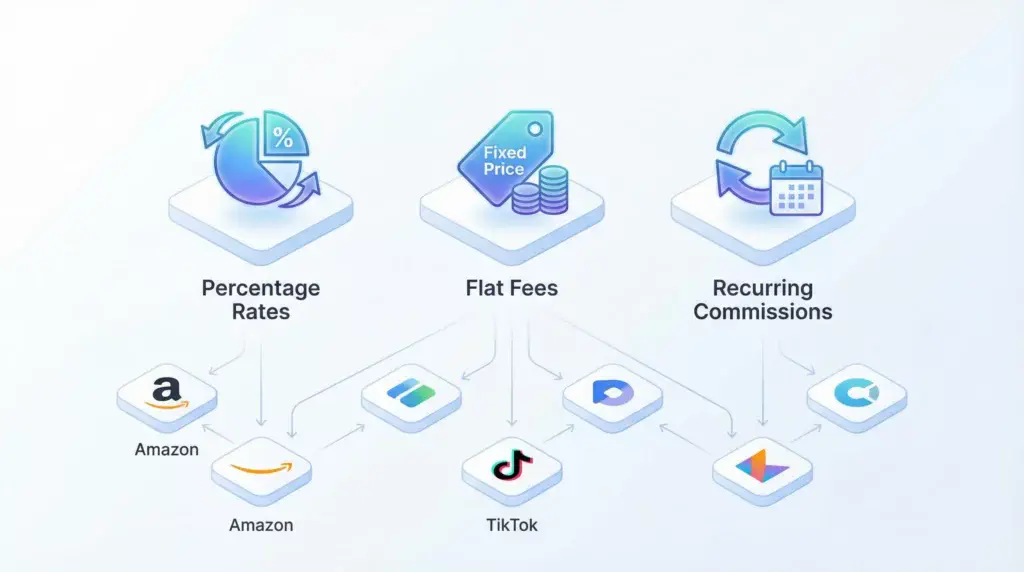
Quick Answer: What Is an Affiliate Commission Structure?
Affiliate commission structures explain how an affiliate earns money for referring traffic, leads, or sales.
The most common models include:
- Pay-Per-Sale (PPS): Earn when a purchase is made
- Pay-Per-Lead (PPL): Earn for signups or form submissions
- Pay-Per-Click (PPC): Earn per click
- Recurring Commissions: Earn ongoing payouts while a customer stays subscribed
Affiliate Commission Models Comparison
| Commission Model | How It Works | Best For | Beginner Friendly |
|---|---|---|---|
| Pay-Per-Sale (PPS) | You earn a commission when someone buys through your link | Product reviews, buyer guides, comparisons | Yes |
| Pay-Per-Lead (PPL) | You earn when someone signs up, fills out a form, or starts a free trial | Service offers, software, finance, education | Yes |
| Pay-Per-Click (PPC) | You earn when someone clicks your affiliate link | High-traffic platforms, ad-style campaigns | Moderate |
| Recurring Commissions | You keep earning as long as the customer stays subscribed | Memberships, software, hosting, training platforms | Yes |
| Two-Tier Programs | You earn from your referrals and sometimes from affiliates you refer | Communities, training platforms, partner programs | Moderate |
Not all affiliate commission structures are equal. Some pay once, while others create long-term income through recurring commissions. For beginners, understanding the difference can save time and help you choose better programs from the start.
What Is an Affiliate Commission Structure?
An affiliate commission structure defines how and when an affiliate earns money for referring traffic, leads, or sales.
Affiliate Commission Models Comparison
| Commission Model | How It Works | Best For | Beginner Friendly |
|---|---|---|---|
| Pay-Per-Sale (PPS) | You earn a commission when someone buys through your link | Product reviews, buyer guides, comparisons | Yes |
| Pay-Per-Lead (PPL) | You earn when someone signs up, fills out a form, or starts a free trial | Service offers, software, finance, education | Yes |
| Pay-Per-Click (PPC) | You earn when someone clicks your affiliate link | High-traffic platforms, ad-style campaigns | Moderate |
| Recurring Commissions | You keep earning as long as the customer stays subscribed | Memberships, software, hosting, training platforms | Yes |
| Two-Tier Programs | You earn from your referrals and sometimes from affiliates you refer | Communities, training platforms, partner programs | Moderate |
Not all affiliate commission structures are equal. Some pay once, while others create long-term income through recurring commissions. For beginners, understanding the difference can save time and help you choose better programs from the start.
If you are still learning the basics, my guide on How Affiliate Programs Work explains how tracking, referrals, cookies, and payouts all fit together.
Related Resources
- How to Choose the Right Affiliate Program
- Benefits of Becoming an Affiliate Marketer
- Affiliate Marketing Terminology Explained
- Common Myths About Affiliate Marketing Debunked
- How Affiliate Marketing Works: Step-by-Step Guide
- Mistakes to Avoid When Starting Affiliate Marketing
- Affiliate Programs Explained
- Top 10 Affiliate Programs for Beginners
- Wealthy Affiliate Reviews & Resources
Typical Affiliate Commission Rates
Typical commission rates vary depending on the type of offer:
- Physical products: 1%–10%
- Digital products and SaaS: 20%–50% or more
- Subscriptions and memberships: often recurring commissions
These ranges can vary depending on the niche, the company, and the quality of the offer.
Best Affiliate Commission Structures for Beginners
For most beginners, the best affiliate commission structures are the ones that are easiest to understand, easiest to promote naturally, and most closely matched to the needs of their audience.
The most beginner-friendly commission models are usually:
Pay-Per-Sale
This is the most common model and one of the easiest for beginners to understand. You recommend a product, someone buys it, and you earn a commission.
Pay-Per-Lead
This can be helpful for beginners because the visitor does not always need to make a purchase. In some programs, a signup or free trial is enough to generate a commission.
Recurring Commissions
Recurring commissions are often attractive because one referral can create income over time. This model is common in software, memberships, hosting, and training platforms.
For example, some beginner-friendly platforms use recurring commissions, which can be more appealing than one-time low-ticket payouts. If you want to see how that works in practice, read my Wealthy Affiliate Review.
If you want to compare commission models across different beginner programs, see Best Affiliate Programs for Beginners.
Best Affiliate Commission Structures for Beginners
For most beginners, the best affiliate commission structures are the ones that are easiest to understand, easiest to promote naturally, and most closely matched to the needs of their audience.
The most beginner-friendly commission models are usually:
Pay-Per-Sale
This is the most common model and one of the easiest for beginners to understand. You recommend a product, someone buys it, and you earn a commission.
Pay-Per-Lead
This can be helpful for beginners because the visitor does not always need to make a purchase. In some programs, a signup or free trial is enough to generate a commission.
Recurring Commissions
Recurring commissions are often attractive because one referral can create income over time. This model is common in software, memberships, hosting, and training platforms.
For example, some beginner-friendly platforms use recurring commissions, which can be more appealing than one-time low-ticket payouts. If you want to see how that works in practice, read my Wealthy Affiliate Review.
If you want to compare commission models across different beginner programs, see Best Affiliate Programs for Beginners.
Two well-known examples of different commission approaches are Amazon Associates Review, which is often based on lower percentage payouts for physical products, and Wealthy Affiliate Review, which focuses more on training and recurring-style earning potential.
What Does “Affiliate Fee” Mean?
An affiliate fee is the commission paid when a tracked action occurs, such as a sale or signup.
Affiliate Marketing Models Explained
Some of the most common affiliate program structures include:
- Single-tier programs
- Two-tier programs
- Recurring revenue programs
- CPA networks
Each model works differently, so it is important to understand how a program pays before promoting it.
What Makes an Affiliate Program Profitable?
A program can look attractive on paper, but profitability depends on more than just the percentage paid.
Important factors include:
- conversion rate
- average order value
- earnings per click
- cookie duration
- audience fit
Commission percentage alone does not determine whether a program is worth promoting. Factors like conversion rate, cookie duration, and audience fit also matter. I explain this more in How to Maximize Your Affiliate Earnings.
Build Affiliate Income Step-by-Step
Build Affiliate Income Step by Step
Understanding commission structures is only one part of affiliate marketing success. The next step is learning how to match the right offers with the right audience and create content that converts.
Advanced Tips to Increase Affiliate Commissions
Once you understand commission models, you can improve your results by focusing on:
- Focus on high-paying niches
- Improve CTA placement
- Track link performance
- Update older content
- Negotiate higher commissions
Learn Affiliate Marketing the Right Way
For beginners who want structured training, tools, hosting, and community support, Wealthy Affiliate is a widely used platform.
Start Learning Affiliate Marketing Today
Browse My Wealthy Affiliate Reviews
Frequently Asked Questions About Affiliate Commissions
What is a typical affiliate commission?
Physical products usually pay 1%–10%, while digital and SaaS programs often pay 20%–50% or more.
What’s a good affiliate conversion rate?
Between 1% and 5% is strong for most niches.
Are recurring commissions better?
Yes, especially when customer retention is high.
Which affiliate commission structure is best for beginners?
For most beginners, pay-per-sale, pay-per-lead, and recurring commissions are the easiest models to start with because they are straightforward and commonly used by beginner-friendly affiliate programs.
Are high commission rates always better?
Not always. A high commission rate does not help much if the product is difficult to sell, the offer does not match your audience, or the conversion rate is low.
What is better: recurring commissions or one-time commissions?
Recurring commissions are often better for long-term income because one referral can continue paying over time. One-time commissions can still work well, especially for higher-ticket offers.
Want to Learn How Affiliate Programs Actually Pay?
Understanding commission structures is only one part of building affiliate income. You also need to know how affiliate programs work, which beginner-friendly offers are worth promoting, and how to match the right programs to your audience.
Start with these next guides:
- Best Affiliate Programs for Beginners
- How Affiliate Programs Work
- How to Maximize Your Affiliate Earnings
- Wealthy Affiliate Review
- Amazon Associates Review
Final Thoughts
Affiliate marketing success comes from choosing the right commission structures, aligning offers with your audience, and staying consistent.
Explore the Program Reviews – Building an Online Business Guide:
- Best Affiliate Programs for Beginners – Building an Online Business
- 7 Affiliate Programs Beginners Can Actually Make Money With (2026)
- Top 10 Affiliate Programs for Beginners
- High-Paying Affiliate Programs in Tech
- Wealthy Affiliate Review
- Amazon Associates Review
- Why Some Affiliate Programs Convert Better for Beginners (And Others Don’t) – 2026 Guide
- How Affiliate Programs Work (Big Explainer)
- Affiliate Commission Structures Explained
- Affiliate Commission Structures: How to Maximize Your Earnings
When you’re ready to turn traffic into income, start here:
7 Affiliate Programs Beginners Can Actually Make Money With (2026)
Affiliate Disclaimer: Some links are affiliate links. I may earn a commission at no extra cost to you. I only promote products I genuinely recommend.