
Top Red Flags: What to Avoid (and What to Look For)
affiliate marketing can be a great way to build an online income — but only if you know how to distinguish the good opportunities from the bad ones. In this post, we’ll walk through the biggest red flags to watch for in affiliate programs, and what traits indicate a trustworthy platform.
Not all affiliate programs are created equal. Some are designed to help you grow — others are designed to drain your wallet.
Learn how to identify warning signs and safe programs by visiting our Online Business Scams & Warnings hub.
Red Flag #1: Guaranteed Income Claims
If a program promises you’ll make a specific amount of money in a short time with little effort, that’s a classic “too good to be true” scenario. Real affiliate marketing takes skill and time — something explored deeply in our guide on online scams.
Red Flag #2: Huge Upfront Payments Before Training
Programs that ask for major fees to access real content are usually selling hype, not substance. Scammers often hold the real content behind upsells. For concrete examples of common scams, see Common Affiliate Marketing Scams.
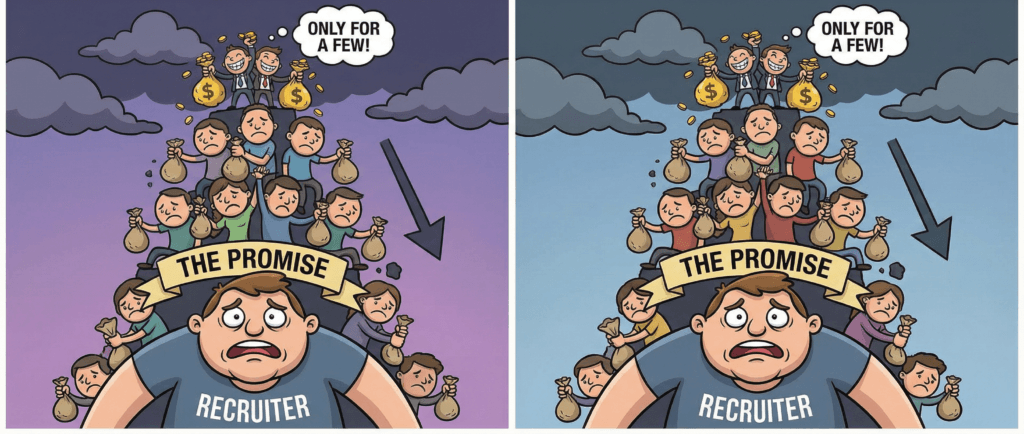
Red Flag #3: Heavy Recruitment Focus
If earning rewards in the program depends more on recruiting others than selling actual products or services, you could be dealing with a pyramid‑style setup. Learn how to spot this pattern in this guide on spotting scams.
Red Flag #4: No Clear Training or Support
Legitimate programs include structured learning, mentorship, or an active community. If it feels like you’re left on your own after paying, that’s a problem — something many beginners share in their stories, like this one: My Journey.
Spotting red flags is one thing — driving traffic is another. Learn how to grow real traffic in my Traffic Generation Strategies guide.
Understanding red flags is important, but the bigger picture matters too. Visit the complete affiliate marketing guide to see how to select programs, drive traffic, and build your first affiliate site safely.
Try Wealthy Affiliate — Training You Can Trust
The Better Business Bureau advises reviewing transparency and complaints before joining any online opportunity (BBB Scam Studies).
Good Traits to Look For
- Clear modules and video lessons
- A supportive community for questions
- Free trial or starter access
- Focus on real marketing skills (SEO, content, traffic)
For more tips on choosing quality affiliate programs, check out our article on How to Choose the Right Affiliate Program and Understanding Affiliate Marketing Terms.
This is why I personally recommend platforms like Wealthy Affiliate for beginners — the focus is learning, not pressure.
Where to Go Next
If you’re still deciding, start here: Online Scams Exposed
Start Building a Legitimate Affiliate Business Today
Other Scam Awareness Guides
- Online Business Scams & Warnings hub – Start here for a full overview of scams and safe platforms.
- Online Scams Exposed: How to Avoid Scams
- Common Affiliate Marketing Scams and How to Avoid Them
- How to Spot Affiliate Marketing Scams Before You Lose Money
- My Journey in Finding a Legitimate Online Business Opportunity
- Safe Platforms for Beginners: Avoiding Scams and Finding Legit Opportunities
- Top Red Flags in Affiliate Programs: What to Avoid (and What to Look For)
- Case Studies: Real Affiliate Marketing Scams Beginners Fell For (And What You Can Learn)
Disclaimer: This post contains affiliate links. If you choose to act on one of these links I may earn a small commission at no extra cost to you. I only recommend programs I personally use and trust.