
Learn which SEO tools affiliate marketers use to research keywords, optimize content, track rankings, and grow targeted organic traffic.
Part of the SEO for affiliate marketing Learning Hub
This guide is part of our main hub on SEO for Affiliate Marketing.
If you’re learning how affiliate websites attract organic traffic, start with the full hub guide:
Why SEO Tools Matter for Affiliate Marketing
SEO tools help affiliate marketers discover keyword opportunities, optimize content, analyze competitors, and track search performance.
Without data from SEO tools, affiliate marketers are essentially guessing which keywords to target and whether their content is performing well.
SEO tools allow affiliate marketers to:
• identify profitable keywords
• analyze competitor strategies
• improve content optimization
• track rankings and organic traffic
These insights help affiliate websites develop data-driven SEO strategies instead of relying on guesswork.
SEO Strategy Guides for Affiliate Marketing
affiliate SEO involves several connected strategies including keyword research, content optimization, technical SEO, and authority building.
Search engine optimization involves several connected strategies that help affiliate websites attract organic traffic. The guides below explain each part of the SEO process step-by-step.
| SEO Strategy | What It Helps With | Guide |
|---|---|---|
| Keyword Research | Identifies search topics people are looking for | Keyword Research for Affiliate Marketing |
| On-Page SEO | Optimizes content structure and headings | On-Page SEO Techniques for Affiliate Websites |
| Long-Tail Keywords | Targets specific search queries with lower competition | Using Long-Tail Keywords to Capture Targeted Traffic |
| SEO Tools | Helps analyze keywords, traffic, and rankings | SEO Tools Every Affiliate Marketer Should Use |
| Backlinks | Builds website authority and credibility | How to Build Backlinks for Affiliate Marketing |
| Technical SEO | Improves website performance and crawlability | Improving Site Speed for SEO |
| Schema Markup | Helps search engines understand structured content | Schema Markup for Affiliate Websites |
| Internal Linking | Connects related pages and strengthens topic structure | Internal Linking Strategies for Affiliate Websites |
These guides are part of the SEO for Affiliate Marketing learning hub, which explains how search engines understand website content and how affiliate websites can build long-term organic traffic.
👉 SEO for Affiliate Marketing for Beginners
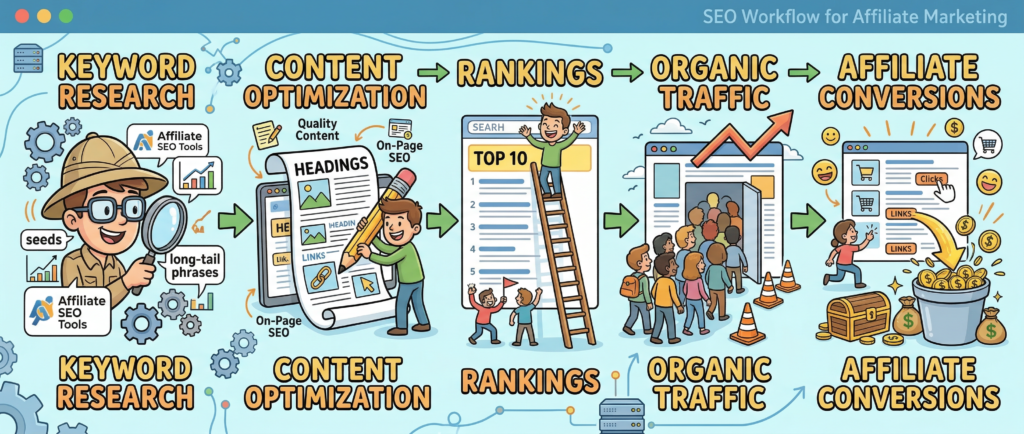
What Tools Do Affiliate Marketers Use?
Affiliate marketers use a combination of keyword research tools, analytics platforms, and optimization tools to improve search visibility and organic traffic.
Common categories of SEO tools include:
• keyword research tools
• SEO analytics tools
• ranking tracking tools
• content optimization tools
These tools help affiliate marketers understand how SEO improves affiliate marketing performance.
Essential SEO Tools Every Affiliate Marketer Should Use
Affiliate marketers typically rely on several categories of tools.
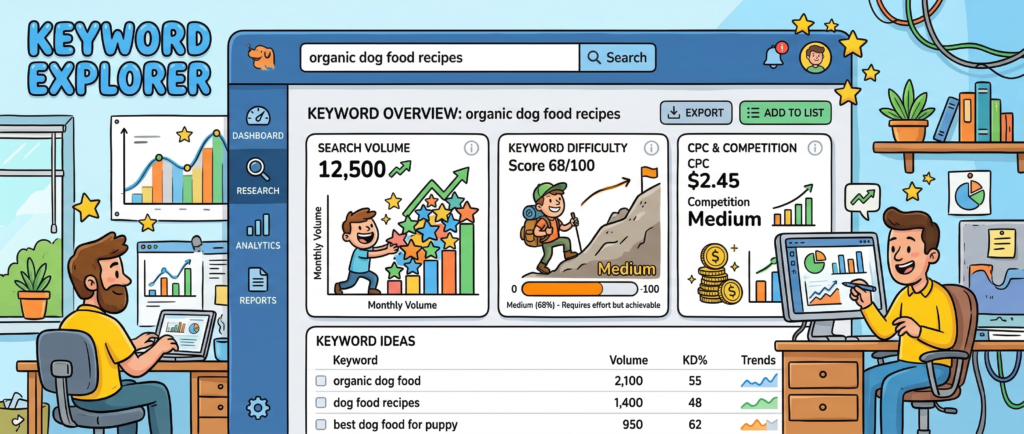
Keyword Research Tools
Keyword research tools help identify search terms people use when looking for products, tutorials, or solutions.
Examples include:
• Ahrefs
• SEMrush
• Google Keyword Planner
These tools help marketers discover:
• search volume
• keyword difficulty
• competitor rankings
You can learn more about keyword strategies in our guide to:
Keyword Research for Affiliate Marketing
SEO Analytics Tools
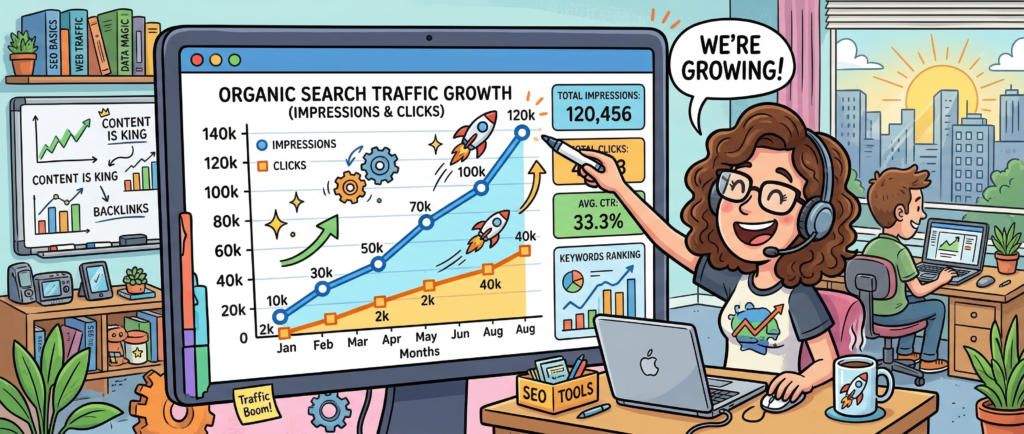
SEO analytics tools track website performance and organic search traffic.
Important tools include:
• Google Search Console
• Google Analytics
These tools help affiliate marketers analyze:
• impressions
• click-through rates
• keyword rankings
• traffic sources
You can learn more about this in Google Search Console .
Content Optimization Tools
Content optimization tools help ensure articles match search intent and include relevant keywords.
Examples include:
• Surfer SEO
• Clearscope
• SEO writing assistants
These tools analyze content and suggest improvements for:
• keyword placement
• content depth
• topic coverage
You can learn more about these strategies in our guide to:
On-Page SEO Techniques for Affiliate Websites

Ranking Tracking Tools
Ranking tools monitor how your content performs in search engines.
These tools track:
• keyword rankings
• ranking changes over time
• competitor positions
Examples include:
• Ahrefs Rank Tracker
• SEMrush Position Tracking
Tracking rankings helps affiliate marketers understand which content is attracting traffic and which pages need improvement.

Best SEO Plugins for Affiliate Websites
SEO plugins simplify optimization for affiliate websites.
Popular plugins include:
• Rank Math
• Yoast SEO
These plugins help manage:
• meta titles
• schema markup
• content analysis
Plugins are especially useful for beginners who want to implement best SEO strategies for affiliates without coding knowledge.

How to Choose SEO Tools for Affiliate Marketing
The best SEO tools for affiliate marketers depend on your website size, goals, and budget.
When choosing SEO tools, focus on tools that help with:
• keyword research
• competitor analysis
• ranking tracking
• traffic analytics
Many affiliate marketers start with free tools and gradually add advanced tools as their traffic grows.
How to Do SEO for Affiliate Marketing
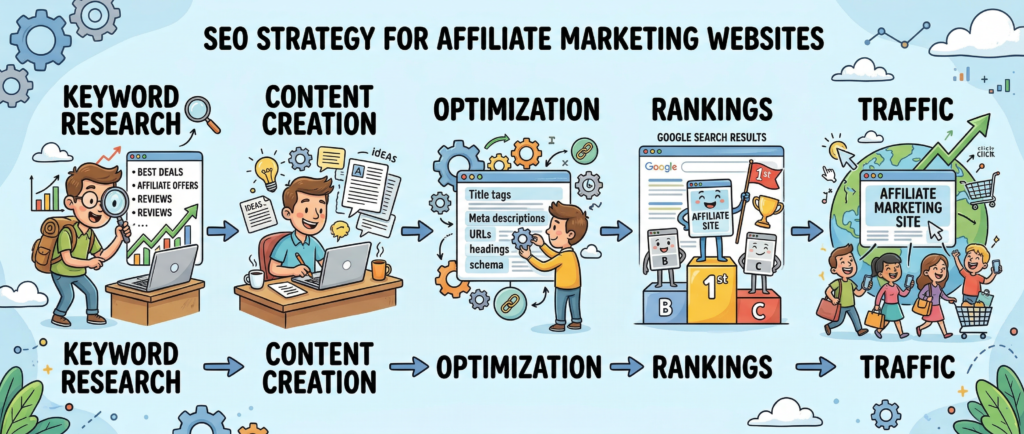
SEO for affiliate marketing involves researching keywords, creating helpful content, optimizing pages, and tracking performance over time.
Typical steps include:
1️⃣ keyword research
2️⃣ content creation
3️⃣ on-page SEO optimization
4️⃣ internal linking
5️⃣ performance tracking
Our article on Long-Tail Keywords for Targeted Traffic explains how long-tail keyword strategies help new websites rank faster.
Related SEO Guides
If you’re learning SEO for affiliate marketing, these guides may also help:
Keyword Research for Affiliate Marketing
On-Page SEO Techniques for Affiliate Websites
Using Long-Tail Keywords to Capture Targeted Traffic
Or return to the full hub: SEO for Affiliate Marketing
Ready to Turn SEO Traffic Into an Affiliate Website?
Understanding SEO tools is only one part of building an affiliate website.
When SEO, keyword research, and content marketing work together, affiliate websites can grow consistent organic traffic.
While researching how to build this site, I found a training platform that teaches beginners how to:
• build an affiliate website
• use SEO tools and keyword research
• create content that attracts targeted traffic
• grow organic traffic step-by-step
You can explore the beginner training here: Wealthy Affiliate – Start for Free – claim 4100 Free AI credits
Many beginners start with the free starter option to see how the platform works before deciding whether to continue.
Start Affiliate TrainingFrequently Asked Questions
What tools do affiliate marketers use?
Affiliate marketers commonly use keyword research tools, SEO analytics tools, ranking trackers, and content optimization tools to improve search visibility.
Which are the essential SEO tools every marketer should use?
Essential SEO tools include keyword research tools, analytics platforms like Google Search Console, SEO plugins, and ranking tracking software.
How do you do SEO for affiliate marketing?
SEO for affiliate marketing involves keyword research, content creation, on-page optimization, internal linking, and tracking rankings to grow organic traffic.
Continue Learning SEO for Affiliate Marketing
If you’re building an affiliate website, these guides may help:
• Keyword Research for Affiliate Marketing
• On-Page SEO Techniques for Affiliate Websites
• Using Long-Tail Keywords to Capture Targeted Traffic
• SEO Tools Every Affiliate Marketer Should Use
• How to Build Backlinks for Affiliate Marketing
• Schema Markup for Affiliate Websites
Or return to the main guide:
👉SEO for Affiliate Marketing for Beginners
Affiliate Disclosure Some links on this page may be affiliate links. If you choose to purchase through them, I may earn a commission at no additional cost to you.