
Part of the SESchema Markup for Affiliate Websites (Beginner Guide 2026)
Part of the SEO for affiliate marketing Learning Hub
Written by Donna
Affiliate marketing researcher
Last updated: March 2026
Schema markup is a type of structured data that helps search engines understand the meaning and structure of content on a webpage. For affiliate marketers, schema markup can help search engines interpret articles, tutorials, reviews, and FAQ sections more accurately.
When search engines understand content clearly, they can categorize information more effectively and sometimes enhance how pages appear in search results.
If you’re learning how SEO helps affiliate websites grow organic traffic, this guide builds on the strategies explained in our main hub:
👉 SEO for Affiliate Marketing for Beginners
What You’ll Learn in This Guide
- What schema markup is and how it works
- Why schema helps affiliate websites
- The most useful schema types for affiliate blogs
- Common schema mistakes to avoid
- How schema fits into technical SEO
Table of Contents
- What Is Schema Markup
- Why Schema Markup Helps Affiliate Websites
- Common Schema Types for Affiliate Websites
- Example of Schema Markup in an Affiliate Article
- Beginner Schema Checklist
- Common Schema Mistakes
- How Schema Fits Into Technical SEO
- The Future of Schema Markup
- Key Takeaways
- Frequently Asked Questions
Who This Guide Is For
This guide is designed for:
• beginner affiliate marketers
• bloggers learning SEO
• website owners improving search visibility
• content creators learning technical SEO
If you’re building an affiliate website and want search engines to better understand your content, schema markup is an important concept to learn.
Quick Answer: What Is Schema Markup?
Schema markup is structured data added to a webpage that helps search engines understand the meaning and structure of the content. It allows search engines to identify elements such as articles, FAQs, products, authors, and organizations.
Affiliate websites often use schema markup to help search engines interpret their content more clearly.
Structured data standards are maintained by Schema.org, a collaboration supported by major search engines.
SEO Strategy Guides for Affiliate Marketing
affiliate SEO involves several connected strategies including keyword research, content optimization, technical SEO, and authority building.
Search engine optimization involves several connected strategies that help affiliate websites attract organic traffic. The guides below explain each part of the SEO process step-by-step.
| SEO Strategy | What It Helps With | Guide |
|---|---|---|
| Keyword Research | Identifies search topics people are looking for | Keyword Research for Affiliate Marketing |
| On-Page SEO | Optimizes content structure and headings | On-Page SEO Techniques for Affiliate Websites |
| Long-Tail Keywords | Targets specific search queries with lower competition | Using Long-Tail Keywords to Capture Targeted Traffic |
| SEO Tools | Helps analyze keywords, traffic, and rankings | SEO Tools Every Affiliate Marketer Should Use |
| Backlinks | Builds website authority and credibility | How to Build Backlinks for Affiliate Marketing |
| Technical SEO | Improves website performance and crawlability | Improving Site Speed for SEO |
| Schema Markup | Helps search engines understand structured content | Schema Markup for Affiliate Websites |
| Internal Linking | Connects related pages and strengthens topic structure | Internal Linking Strategies for Affiliate Websites |
These guides are part of the SEO for Affiliate Marketing learning hub, which explains how search engines understand website content and how affiliate websites can build long-term organic traffic.
👉 SEO for Affiliate Marketing for Beginners
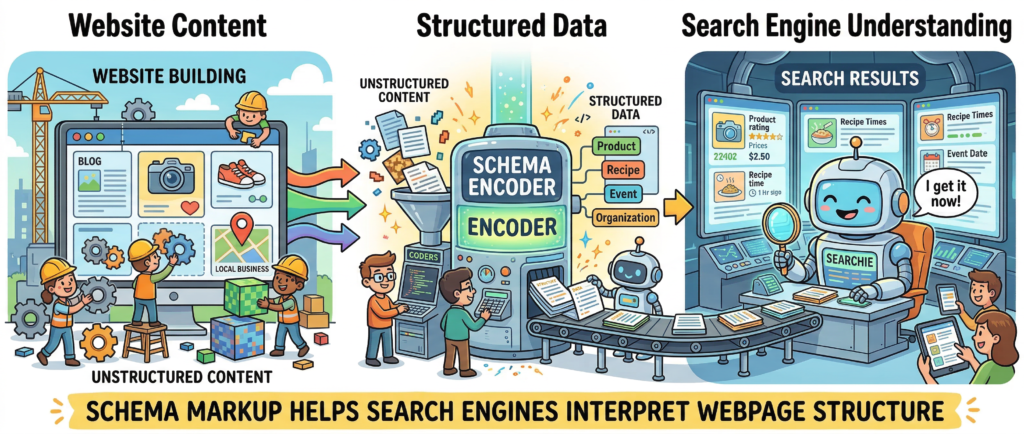
What Is Schema Markup?
Schema markup is code added to a webpage that describes the information on the page in a way search engines can easily understand.
Instead of simply scanning text, search engines can use structured data to identify specific elements such as:
• article headlines
• author names
• publication dates
• FAQ sections
• product information
Search engines like Google Search use structured data to better interpret website content.
Why Schema Markup Helps Affiliate Websites
Schema markup does not directly increase rankings, but it helps search engines interpret content more effectively.
For affiliate websites, structured data can help with:
Better Content Understanding
Structured data helps search engines recognize different parts of a webpage.
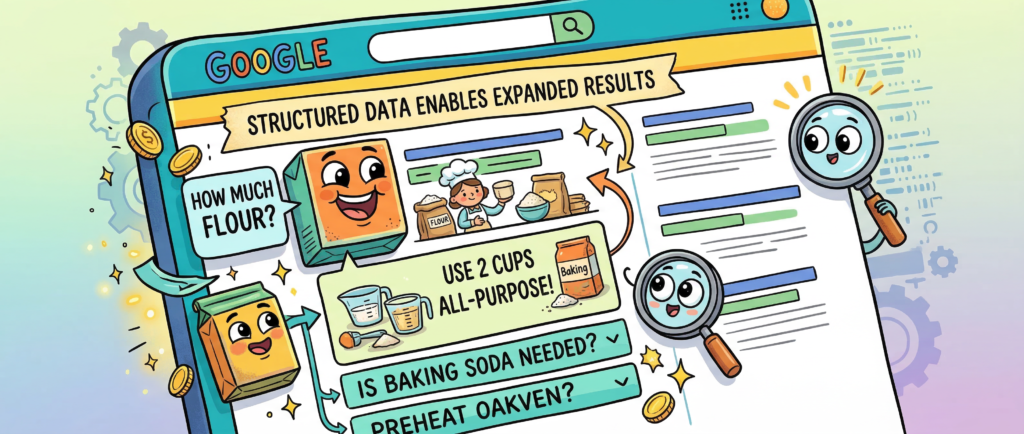
Enhanced Search Results
Some schema types allow search engines to display additional information such as FAQ sections.
AI Search Interpretation
AI search tools rely heavily on structured data to understand relationships between topics.
Common Schema Types for Affiliate Websites
| Schema Type | Purpose |
|---|---|
| Article Schema | Identifies blog posts and tutorials |
| FAQ Schema | Identifies question and answer sections |
| Product Schema | Identifies products in reviews |
| Organization Schema | Identifies website ownership |
| Breadcrumb Schema | Helps search engines understand site structure |
Affiliate websites commonly use several of these schema types.

Example of Schema Markup in an Affiliate Article
For example, an affiliate tutorial explaining keyword research might include schema identifying:
• article headline
• author
• publication date
• FAQ sections
Structured data helps search engines categorize and interpret this information more accurately.
Many SEO plugins automatically generate article schema for blog posts.
Beginner Schema Checklist for Affiliate Websites
If you’re adding schema markup to an affiliate website, start with these steps:
✔ Use article schema for blog posts
✔ Add FAQ schema to question sections
✔ Include organization schema for your website
✔ Ensure structured data matches visible content
✔ Test schema using structured data tools

Common Schema Markup Mistakes
Some website owners implement schema incorrectly, which can prevent search engines from using the structured data.
Common mistakes include:
• using schema that does not match the page content
• duplicating structured data incorrectly
• marking content that does not exist on the page
• adding conflicting schema types
Accurate structured data helps search engines trust the markup.
How Schema Fits Into Technical SEO
Schema markup is part of technical SEO. While it does not directly increase rankings, it helps search engines understand page structure and relationships between content.
Successful affiliate websites combine schema markup with strategies such as:
• keyword research
• on-page SEO
• internal linking
• backlink building
Learn Affiliate SEO Step-by-Step
Understanding schema markup, keyword research, and content optimization can help affiliate websites grow organic traffic. Structured data helps search engines interpret content more clearly, which can sometimes improve how pages appear in search results.
But many beginners struggle because they try to learn SEO, website building, and affiliate marketing from scattered tutorials across the internet.
When I began researching how affiliate websites actually grow traffic, I found a platform that teaches beginners step-by-step how to:
• build an affiliate website
• perform keyword research
• create SEO-optimized content
• attract organic traffic from search engines
The training platform I use is Wealthy Affiliate, which provides step-by-step training, website tools, and community support to help beginners build an online business.
If you’d like to see how affiliate websites are built step-by-step, you can explore the free starter training here:
👉 Start the Free Wealthy Affiliate Starter Membership
Many beginners start with the free membership to explore the training and see how affiliate marketing and SEO strategies work before deciding whether to continue.
When Schema Markup Matters Most
Schema markup is especially useful for websites that publish structured information such as:
• tutorials
• educational articles
• product reviews
• comparison guides
• FAQ sections
These types of pages contain information that search engines can interpret more easily with structured data.
The Future of Schema Markup and Search
Search engines are becoming increasingly sophisticated in how they interpret website content.
Structured data helps search systems understand page context and relationships between topics.
As AI-powered search evolves, schema markup may become even more important for helping search engines interpret information across the web.
Key Takeaways
• Schema markup helps search engines understand webpage content structure
• Structured data can improve how pages appear in search results
• Affiliate websites commonly use article and FAQ schema
• Schema works best when combined with strong SEO practices
Authoritative Resources on Schema Markup
You can learn more about structured data from trusted resources such as:
• Google Search Console
• Ahrefs
• SEMrush
These tools help website owners monitor SEO performance and analyze search visibility.
Want to Learn How Affiliate Websites Grow Traffic?
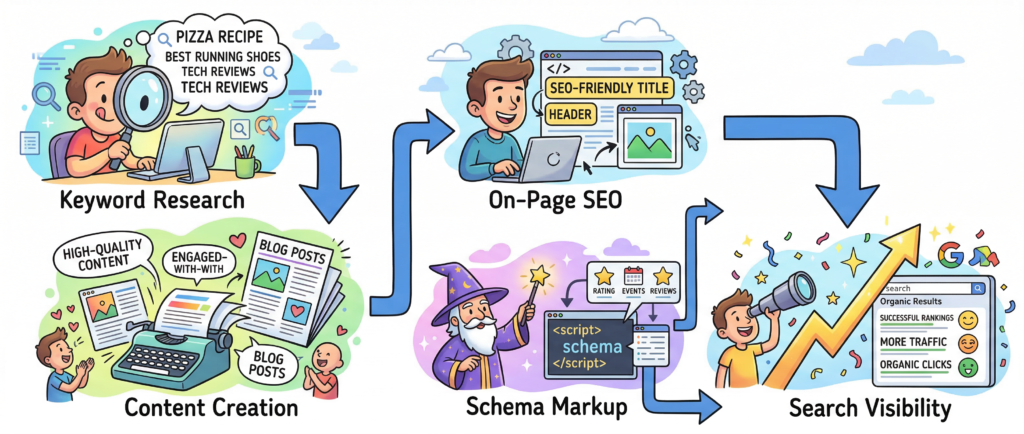
Schema markup is only one part of SEO. Successful affiliate websites combine keyword research, content creation, technical SEO, and traffic strategies.
When I began learning affiliate marketing, I found a training platform that teaches beginners how to:
• build an affiliate website
• learn SEO step-by-step
• perform keyword research
• create content that attracts organic traffic
If you’re curious how the training works, you can explore the free starter membership here:
👉 Explore the Free Wealthy Affiliate Starter Training
Many beginners start with the free option to see how affiliate websites work before deciding whether to continue.
Frequently Asked Questions
What is schema markup in SEO?
Schema markup is structured data added to website code that helps search engines understand the meaning and structure of webpage content.
Do affiliate websites need schema markup?
Schema markup is not required, but it helps search engines interpret content more clearly.
Does schema markup improve rankings?
Schema markup does not directly increase rankings but helps search engines understand webpage content more accurately.
What schema types are useful for affiliate websites?
Common schema types include article schema, FAQ schema, product schema, and organization schema.
How do beginners add schema markup to a website?
Most beginners add schema markup using SEO plugins that automatically generate structured data for blog posts and pages.
Continue Learning SEO for Affiliate Marketing
If you’re building an affiliate website, these guides may help:
• Keyword Research for Affiliate Marketing
• On-Page SEO Techniques for Affiliate Websites
• Using Long-Tail Keywords to Capture Targeted Traffic
• SEO Tools Every Affiliate Marketer Should Use
• How to Build Backlinks for Affiliate Marketing
• Schema Markup for Affiliate Websites
Or return to the main guide:
👉SEO for Affiliate Marketing for Beginners
Affiliate Disclosure
Some links on this page may be affiliate links. If you choose to purchase through them, I may earn a commission at no additional cost to you.
Build Your First Affiliate Website (Free Starter Access)Learn Affiliate SEO Step-by-Step
Understanding schema markup, keyword research, and content optimization can help affiliate websites grow organic traffic.
But many beginners struggle because they try to learn SEO and affiliate marketing from scattered tutorials online.
If you’d like to see how affiliate websites are built step-by-step, you can explore the free starter training here:
Start the Free Wealthy Affiliate Starter Membership